Where to Buy an Engagement Ring Online Without Overpaying
A complete guide to buying engagement rings online without overpaying
- Overpaying often happens by upgrading clarity or settings that add cost without a visible impact.
- Rare Carat helps buyers avoid overpaying by using AI-driven pricing and quality scores, often saving up to 40% on well-balanced diamond and setting combinations.
- All diamonds are certified (GIA, IGI, GCAL) and come with two-step verification (laser inscription + UV testing) for confidence.
- Customize engagement rings with 1,700+ designs, natural or lab diamonds, and metals like yellow, white, rose gold, or platinum.
- Includes free 30-day returns, 1-year resizing, lifetime warranty, free GIA gemologist guidance, and Trustpilot’s top 5.0/5 rating.
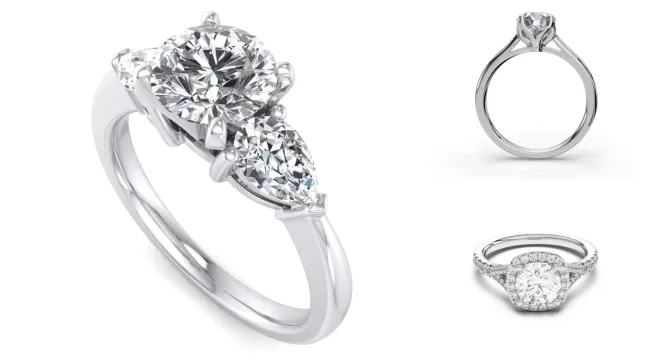
Shopping for an engagement ring online has become far more common in recent years, especially as buyers gain more control over comparing diamonds, settings, and pricing across different retailers.
But once the search begins, it is not always easy to tell whether a ring is fairly priced or if the cost is being driven by branding, hidden markups, or small specification changes that do not noticeably affect how the diamond looks in real life.
That is why many buyers now research where to buy an engagement ring online without overpaying before making a final decision—often alongside broader guidance on the best place to buy a diamond engagement ring, which helps set a clearer benchmark for evaluating options.
Most of the time, overpaying does not come from choosing the wrong diamond—it comes from small choices that add cost without adding visible value.
Things like clarity upgrades, premium settings, or simply not seeing how pricing differences actually add up can quietly push the cost higher, even when the ring doesn’t look all that different in the end.
It is for this reason that when looking for engagement rings online in 2026, it becomes important to be able to understand how the price impacts the appearance and feel of the ring when searching on websites such as Rare Carat.
1. Why People End Up Overpaying for Engagement Rings Online
Most cases of overpaying don’t come from picking a “bad” diamond. It usually happens much earlier in the process, when buyers are still figuring out how online pricing actually works.
Once you start browsing engagement ring styles, the differences between listings can feel subtle at first. Two diamonds might look almost identical on paper, yet the price gap between them can be surprisingly large.
A lot of that comes down to how small details are layered into the final cost, but most importantly,
- Clarity upgrades that don’t always change the visible look.
- Settings that are priced for design complexity rather than impact.
- Pricing structures that don’t make it obvious what you’re actually paying for.
And because everything is shown separately—diamond, setting, specifications—it’s easy to lose track of how those pieces come together in the final price.
That’s usually where buyers start to feel the gap between expectation and reality. What looked straightforward at the beginning slowly turns into a comparison problem, not just a selection problem.
This is also where tools like Rare Carat’s AI-driven pricing and quality scores come in, helping highlight value differences that aren’t always obvious at first glance and, in many cases, helping buyers save up to 40% by steering them toward better-balanced options.
That kind of clarity is often what turns a confusing search into a more confident decision.
2. Why It’s Hard to Spot Real Value When Shopping Online
Once buyers understand why overpaying happens, the next challenge becomes less obvious—figuring out what actually represents real value in the first place.
Online engagement ring listings are designed to make browsing simple. Diamonds, settings, and specifications are broken out clearly, which makes comparison feel straightforward at first. But that structure also removes real-world context that helps people naturally judge differences in person.
In a showroom, a diamond is usually compared in detail against a few close alternatives. Online, the scale is much larger, and the differences are often more subtle than they appear at first glance.
That’s where uncertainty starts to build.
Two engagement rings can share the same carat weight, similar clarity grades, and nearly identical settings—yet still feel different in value once pricing enters the picture. Not because one is dramatically better, but because small performance and design factors are not always obvious from a listing alone.
And when everything looks similar, price becomes the main reference point—even when it doesn’t fully explain what you’re seeing.
What makes value hard to judge online
| What Buyers See | What’s Actually Hard to Judge Online |
|---|---|
| Similar carat weights | How efficiently the diamond spreads its weight visually |
| Matching clarity grades | How inclusions actually impact real-world visibility |
| Same shape category | Subtle differences in proportions and outline |
| Comparable settings | How design affects balance, height, and perceived size |
That gap between what is listed and what is actually perceived is where most of the confusion happens.
It’s also the point where many buyers start moving beyond basic filters and begin looking for clearer ways to interpret value across different combinations.
Rare Carat helps reduce that uncertainty by organizing diamonds in a way that makes those differences easier to understand in context, not just as isolated specifications.
With us, buyers also have access to guidance from over 100 GIA-certified gemologists who help review and filter only certified diamonds, so the focus stays on quality and verified options.
At Rare Carat, all diamonds are certified through leading institutions such as GIA, IGI, and GCAL, adding another layer of confidence during selection.
And because the inventory is broad, it becomes easier to actually find what you are looking for without compromise—with over 1,700 engagement ring designs and more than 2,500 fine jewelry styles available to explore.
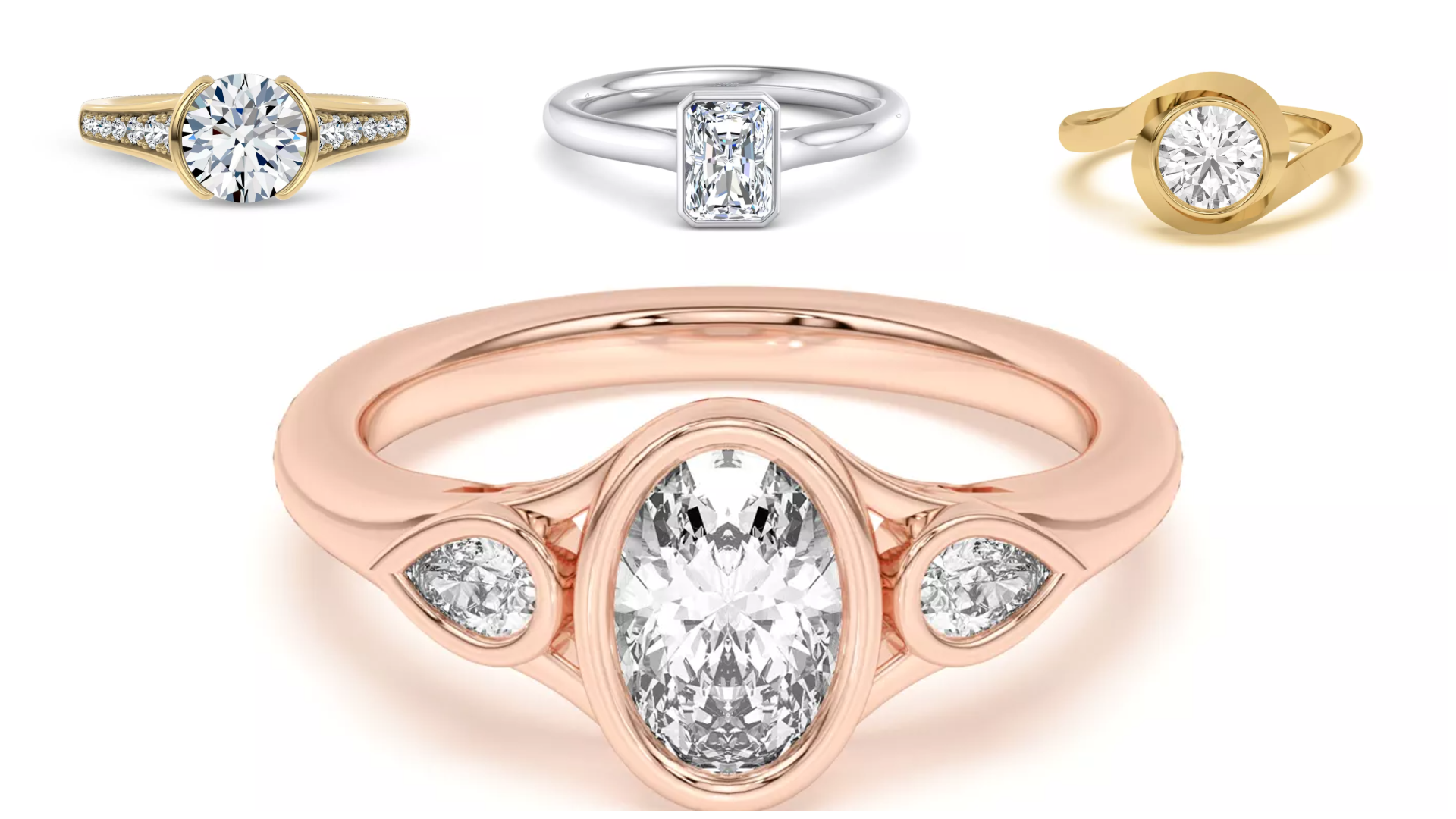
3. What Actually Helps Buyers Avoid Overpaying Online
Once buyers understand how pricing confusion happens and why value is hard to judge online, the next question becomes more practical—what actually helps prevent overpaying in the first place?
At this stage, most people are no longer just comparing listings. They are trying to narrow down choices in a way that feels confident, without constantly second-guessing whether something better exists just one click away.
And that shift usually changes how decisions are made.
Instead of focusing only on individual specifications, buyers start looking for signals that indicate balance—how well a diamond performs visually, whether the setting complements it properly, and whether the price actually aligns with what is being shown.
This is where the way the whole buying process is set up actually starts to matter.
When everything is split across filters and individual specs, it is easy to get stuck on one detail and lose sight of how the ring comes together overall. But when the options are seen in a more connected way, it becomes much simpler to tell when something is truly adding value versus when the price is just going up without much real difference in what you actually see or feel.
The small things that actually reduce the risk of overpaying
- Looking beyond carat weight and focusing on how the diamond performs visually
- Paying attention to how proportions affect real finger coverage rather than just measurements
- Comparing settings based on how they change the overall look, not just design style
- Checking certification consistency instead of assuming all listings carry the same grading reliability
- Evaluating combinations (diamond + setting) rather than treating them as separate decisions
Most overpaying happens when buyers evaluate these in isolation instead of as a complete ring.
And that is usually where Rare Carat becomes part of the process—not just as a place to browse diamonds, but as a way to bring structure into decisions that otherwise feel fragmented.
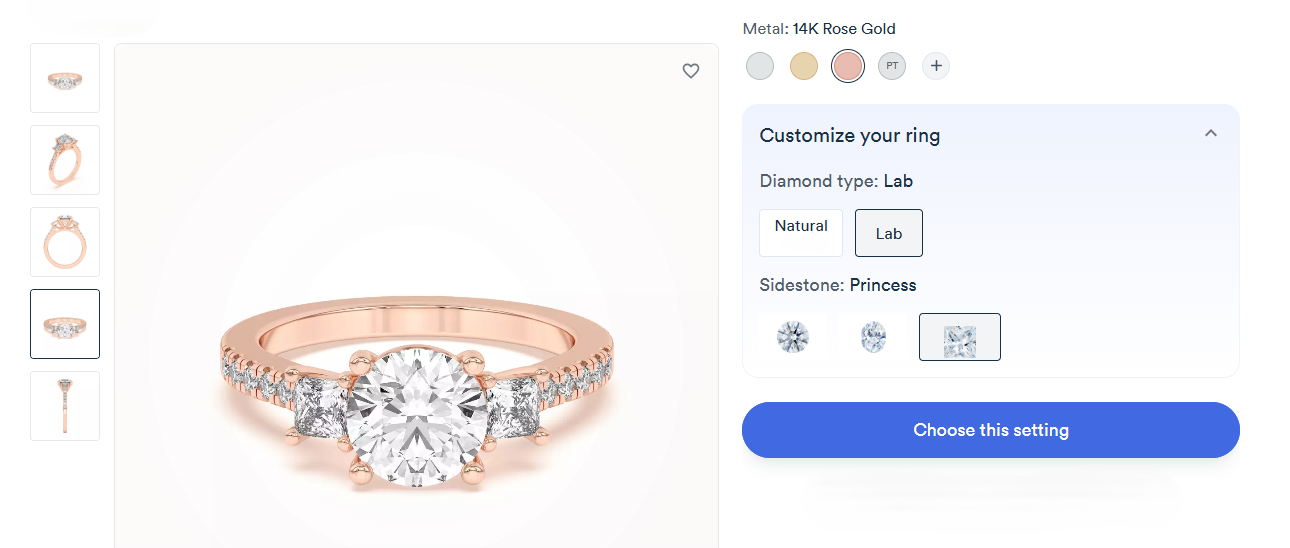
At Rare Carat, both natural and lab-grown diamonds are available, allowing buyers to choose their preferred starting point right away for a more tailored and efficient search experience. And if that direction changes along the way, the customization options make it easy to adjust preferences—whether it’s budget, diamond type, or design style—without starting over.
That kind of flexibility means buyers aren’t really boxed into preset combinations. They can tweak things step by step and gradually shape the engagement ring in a way that feels more personal, instead of just picking from fixed options.
From there, the process naturally shifts. It stops being only about comparing choices and starts feeling more like building something—where the setting and overall design begin to matter just as much as the diamond itself.
4. What Actually Makes a Ring Worth It in Real Life
At some point, it stops being about avoiding overpayment and starts becoming about how the engagement ring actually comes together when worn.
At this stage, it becomes more about how different elements come together in a finished ring and whether the result feels balanced in real life rather than just good on paper.
That’s usually where the perspective changes.
A diamond alone does not define the ring anymore. The way it sits, how the setting frames it, and how all the proportions work together start playing just as much of a role as the stone itself.
When design adds value—and when it just adds cost
Not every design upgrade changes how the ring actually feels when worn.
Some settings genuinely enhance the diamond by improving presence, balance, or sparkle. Others mainly add visual complexity without changing how the center stone performs.
For example:
- A solitaire keeps everything focused on the diamond itself
- A halo increases perceived size and visual impact
- Pavé adds continuous sparkle along the band
- More detailed vintage designs add character and craftsmanship

The key difference is not whether the design is “better,” but whether it actually changes the way the ring looks in proportion to its price.
Sometimes the added detail is meaningful. Other times, it is mostly aesthetic layering that increases the cost more than the visual impact.
Why the same diamond can feel completely different
At the 2-carat or above level, especially, buyers often notice something unexpected—the same diamond can feel noticeably different depending on how it is set.
That difference usually comes from:
- How high or low the diamond sits
- How much of the stone is visible from the top view
- Whether the setting opens up or visually compresses the stone
- How surrounding details influence overall focus
So even when two engagement rings share identical diamond specifications, the final result can feel like two completely different pieces once worn.
This is where the idea of “value” quietly shifts away from paper specs and toward how the ring actually presents itself in real life.
The real shift: from comparing specs to evaluating feel
At some point in the buying journey, most people stop thinking in terms of isolated details like clarity grades or carat weight alone.
Instead, the focus naturally moves toward the following:
- Does it look balanced on the finger?
- Does the setting support the diamond or distract from it?
- Does it feel too minimal or too heavy visually?
- Does everything work together as one design?
That is usually when decisions start feeling clearer, because the ring is no longer being evaluated as separate parts—it is being seen as a complete piece.
And that shift is important, because it is often what separates a ring that simply looks “expensive” from one that actually feels right when worn every day.
Once that balance starts to make sense, the conversation naturally moves into specific setting styles—because that is where most of these design decisions actually show up in practice.
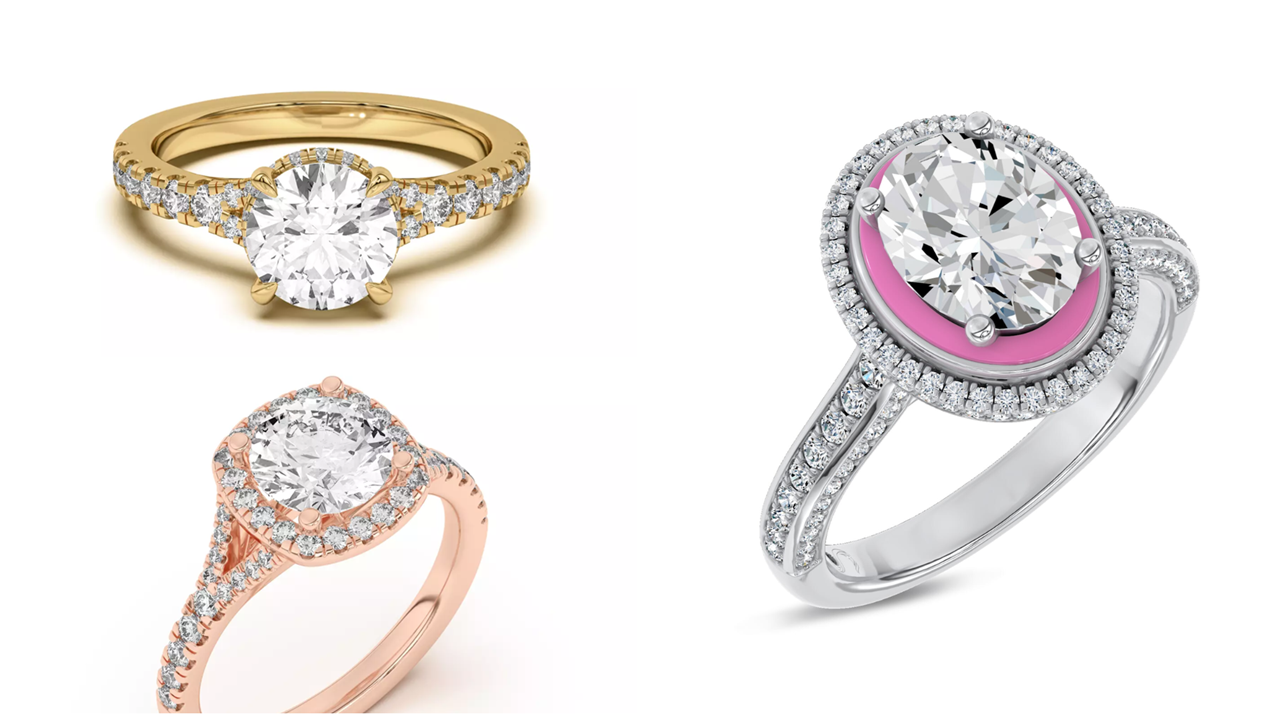
5. Settings That Often Change the Price More Than the Diamond
Once the diamond choice starts feeling more settled, attention usually shifts to the setting—and this is where a lot of the pricing confusion actually shows up.
| Setting Style | What It Usually Changes | Often Best For |
|---|---|---|
| Solitaire | Keeps most of the attention on the center diamond itself | Minimal and timeless engagement ring styles |
| Halo | Adds extra sparkle and makes the center stone appear larger | Buyers wanting stronger visual presence |
| Pavé | Introduces continuous sparkle along the band itself | More detailed and brighter overall looks |
| Hidden Halo | Adds subtle sparkle from side angles without changing the cleaner top view | Buyers wanting a simpler look with extra detail underneath |
On the surface, settings can look like a style decision. But in practice, they often influence both how the ring looks and how much it ends up costing. And the difference is not always obvious at first glance.
Where buyers often get surprised by the price
Most overpaying at this stage does not come from choosing the “wrong” design. It usually comes from small structural choices that quietly add cost without changing the core look of the ring in a meaningful way.
Common examples include:
- Extra diamond-heavy bands that increase cost without significantly changing the center stone focus
- Complex multi-row pavé that adds visual density but not always proportional impact
- Heavier metal designs that raise pricing through material and craftsmanship
- Decorative detailing that is noticeable up close, but subtle once worn
This is where many buyers start to realize something important—not all visual upgrades actually translate into visible improvement when the ring is on the finger.
Best-Selling Engagement Ring Styles Buyers Actually Choose
At this stage, most buyers already have a rough idea of what they like in a setting—but what usually helps finalize the decision is seeing how those styles actually come together in real rings.
Once a diamond is set, the difference is no longer theoretical. It becomes visual, and even subtle design shifts can change how the entire ring feels when worn.
Below are some of the most commonly chosen engagement ring styles buyers explore when narrowing down their final choice:
- Pavé Side-Stone Engagement Ring in 14K White Gold
Some rings stand out because of size. This one stands out because of its balance.
The slim pavé band keeps the overall look delicate, while the 20 round-cut side diamonds add just enough sparkle to make the ring feel brighter from every angle without competing with the center stone itself.
Made in 14K white gold, the setting keeps the look bright and clean while letting the center diamond stand out more naturally against the slimmer band.
Since it works with all diamond shapes, buyers can keep things classic with a round cut or go for a longer shape like oval or pear.

- Petite Three-Stone Engagement Ring in 14K Yellow Gold
Not every three-stone ring has to feel bold or oversized. This one keeps things slimmer and more understated.
The two side diamonds add a little extra light around the center stone without making the ring feel too busy, while the yellow gold gives the entire setting slightly more contrast once worn.
Because the band stays fairly thin, the center diamond still ends up doing most of the talking.

- Braided Pavé Engagement Ring in 14K Rose Gold
Some engagement rings look clean and minimal. This one leans more toward texture and detail.
The braided design gives the band a more flowing look, and the small pavé diamonds scattered through the twists help the ring catch light from different angles without feeling overly flashy.
Rose gold changes the mood of the setting, too. It feels a little softer visually, especially with shapes like oval, pear, and cushion cuts.
Even with all the detailing, the ring still wears fairly comfortably on the hand and does not feel too thick or overpowering.

- Split-Shank Halo Engagement Ring in 14K White Gold
This ring catches attention pretty quickly once light hits it.
The split band gives the setting a little more shape and openness near the center stone, while the halo adds extra sparkle around it without making the design feel too crowded.
Smaller pavé diamonds continue along the band and up the sides, so the ring stays bright from more than just the top view. In white gold, the entire setting leans more toward a clean, diamond-forward look rather than focusing heavily on the metal itself.

- Hidden Halo Engagement Ring in 14K Yellow Gold
At first glance, this ring feels very minimal. Then the smaller details start showing up.
The hidden halo sits just beneath the center diamond, adding extra sparkle from side angles without changing the cleaner top view most buyers usually want from a solitaire-style setting.
The narrow 1.60mm band keeps most of the focus on the center stone, while the yellow gold adds a little more contrast around the diamond once worn.
Because the design stays fairly clean overall, it works especially well for buyers who want something timeless with a small extra detail hidden in the setting.

Natural vs Lab-Grown Engagement Rings: What Impacts Overpaying
| Factor | Natural Diamond Engagement Rings | Lab-Grown Engagement Rings |
|---|---|---|
| Price vs Real Value | Higher pricing often reflects rarity more than visible difference in appearance | More aligned with visual quality, reducing the chance of paying extra for perception |
| Overpaying Risk | Higher risk if comparison across similar stones is unclear or inconsistent | Lower risk due to more transparent and predictable pricing structure |
| Size for Budget | Smaller carat size for the same budget in most cases | Larger and more visually impactful diamonds within the same spend |
| Price Variation Across Stores | Similar diamonds can vary significantly in price between sellers | More consistent pricing across comparable quality grades |
| Buying Outcome | Greater chance of paying a premium for rarity rather than visible improvement | Better balance between price paid and visible diamond quality |
How this connects to real buying decisions
At this point, most buyers are no longer just comparing styles—they’re trying to understand which combination actually feels right when worn daily.
And that’s where the decision becomes less about individual design elements and more about the overall balance between diamond, setting, and budget.
6. Why Rare Carat Has Become a Go-To Choice for Engagement Rings Online
By the time most buyers reach the end of the engagement ring search process, the focus usually shifts away from just specs and pricing.
The bigger question becomes whether the entire experience actually feels reliable enough to trust for something this important.
That is part of why so many buyers now turn to Rare Carat when trying to figure out where to buy an engagement ring online with transparent pricing.
| What Buyers Get at Rare Carat | Why It Matters During the Buying Process |
|---|---|
| Merchant of record structure | Keeps the experience more centralized and easier to manage from purchase to delivery |
| 100% money-back guarantee | Adds confidence before making a high-value purchase online |
| Free 30-day returns | Gives buyers time to see how the ring actually feels in real life |
| 1-year free resizing for engagement rings | Makes post-purchase adjustments easier without additional stress |
| 30-day resizing for eternity rings | Provides flexibility for harder-to-adjust eternity band styles |
| Lifetime manufacturer warranty | Offers long-term protection beyond the initial purchase period |
| 100+ GIA-trained gemologists | Helps buyers compare diamonds and settings with expert guidance |
| 5/5 Trustpilot rating with 3,000+ verified reviews | Reflects consistent buyer satisfaction across the overall experience |
| Trustpilot’s top-rated jeweler two years in a row | Shows continued buyer trust beyond just marketing claims |
At a certain point, avoiding overpaying stops being the main goal.
What most buyers actually want by the end of the process is a ring that feels balanced once worn—something that looks right on the hand, fits comfortably into everyday life, and still feels worth it long after the purchase itself is over.
That is usually where the search becomes much easier to narrow down.
For buyers who want to continue exploring specific diamond sizes, styles, and engagement ring settings more closely, these collections are often the next place comparisons naturally continue:
Shop By Carat