How to Choose a Men's Diamond Ring: A Complete Buying Guide
A step-by-step guide to picking the right diamond, metal, and fit for a men's diamond ring.
- Diamonds in men's rings are usually built into the band itself, so setting style (flush, channel, or single stone) shapes the design as much as the stone does.
- Lab-grown diamonds run 60 to 87% cheaper than natural stones at the same carat weight, while natural diamonds hold onto rarity and resale value that lab-grown doesn't.
- Every diamond should carry certification from GIA, IGI, or GCAL, backed by physical checks like inscription verification and UV fluorescence testing, not just paperwork alone.
- Band width, metal choice, and setting complexity all affect comfort, upkeep, and cost, so a realistic budget accounts for more than carat weight by itself.
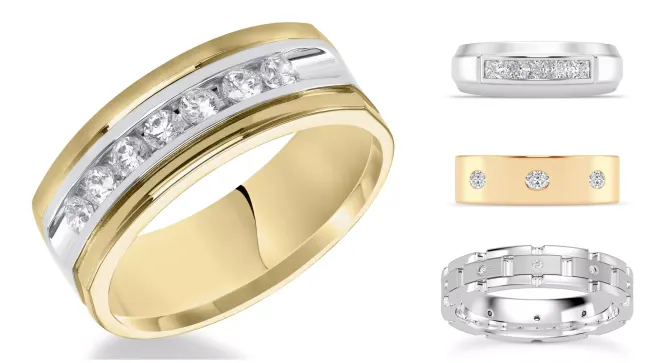
Most people start shopping for men's diamond rings expecting a quick decision. Then the options start piling up.
Flush-set or channel-set. Platinum or gold. A slim band or something with more weight to it.
None of these choices are complicated on their own, but stacked together they can turn a simple purchase into a longer process than expected.
The good news is that most of it comes down to a handful of factors that build on each other, starting with how the diamond itself gets placed into the ring.
That's what this men's diamond ring buying guide is for.
It walks through each decision in the order it usually comes up, so nothing feels like an afterthought once the ring is already picked out. By the end, choosing between styles, metals, and settings should feel less like guesswork and more like narrowing down what actually fits.
1. Understand How Diamonds Are Used in Men's Rings
Diamond rings for men rarely put the stone front and center the way men's or women's engagement rings do.
Instead, diamonds are usually built into the band itself, so how the stone is set matters just as much as the stone.
That distinction shows up in three common approaches, each changing how much the diamond stands out against the metal.
| Setting Style | How It Looks | Best For |
|---|---|---|
| Flush-set | Diamond sits level with the metal, low profile | Understated, everyday wear |
| Channel-set | Diamonds run along the band between two metal walls | More visible sparkle without standing out |
| Single accent stone | One diamond, no row or cluster | Minimal detail, subtle presence |
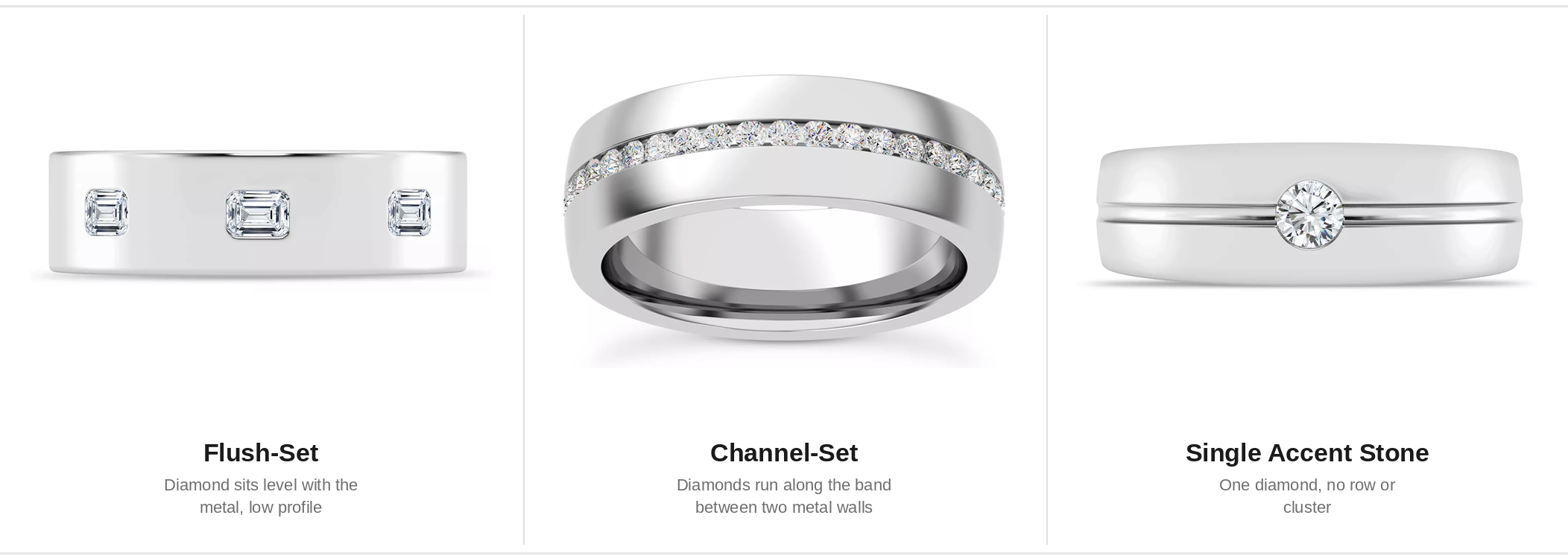
Because the setting carries so much of the visual weight here, having a wide range of diamonds to choose from matters more than it would with a solitaire, where one stone does all the work.
Rare Carat's collection of more than 2 million certified natural and lab-grown diamonds gives buyers enough range to match a stone to the exact setting they have in mind, instead of settling for whatever a smaller inventory happens to have on hand.
2. Natural vs. Lab-Grown Diamonds
Natural and lab-grown diamonds share the same chemical structure and visual qualities.
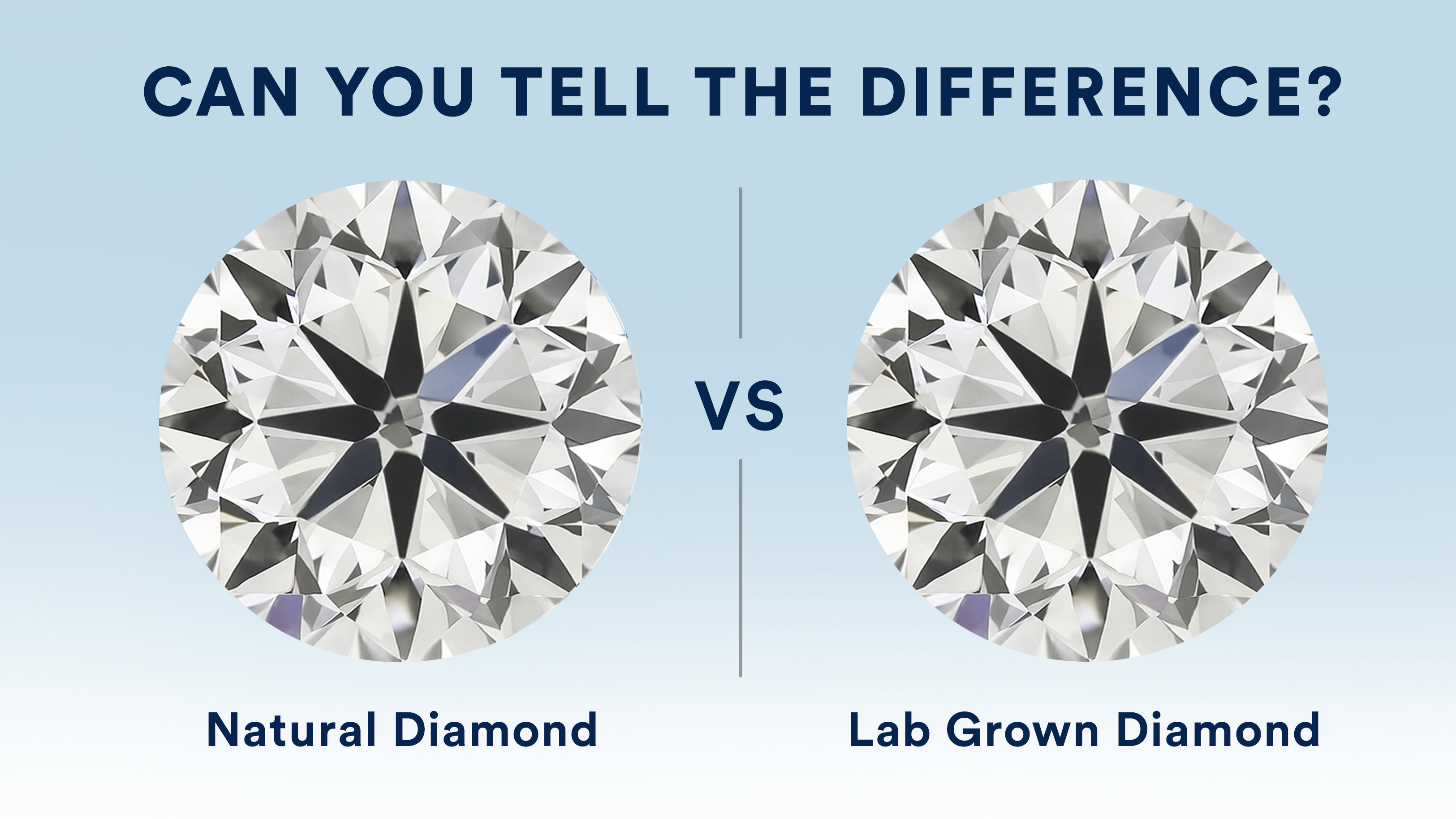
The difference shows up mainly in price and how that price behaves.
Because lab-grown diamonds come from a controlled process, the price mostly just tracks the size. A 1-carat stone costs roughly what you'd expect based on the 0.5-carat and 2-carat prices around it, since production costs scale more predictably than nature does.
Natural diamonds don't follow that same logic. Two stones at the same carat weight can price differently depending on how rare that specific combination of cut, color, and clarity turns out to be. A mined diamond with an unusual amount of brilliance or a rare color grade can command a premium that has nothing to do with size alone.
| Carat Weight | Natural Diamond (Approx.) | Lab-Grown Diamond (Approx.) |
|---|---|---|
| 0.50 ct | $1,200–$2,500 | $500–$1,200 |
| 1.00 ct | $4,000–$8,000+ | $1,500–$3,500 |
| 2.00 ct | $12,000–$25,000+ | $4,000–$8,000 |
| 3.00 ct | $25,000–$60,000+ | $8,000–$15,000 |
Prices above are rough market ranges as of August 2026 and will shift depending on the retailer, the stone's quality, and current market conditions.
Buyers on a tighter budget who still want size and clarity often lean lab-grown. Buyers who prioritize rarity or resale history tend to stay natural. Lab-grown diamonds typically run 60–87% less than a comparable natural stone at the same specs.
3. Certification and Verification: What Actually Confirms a Diamond
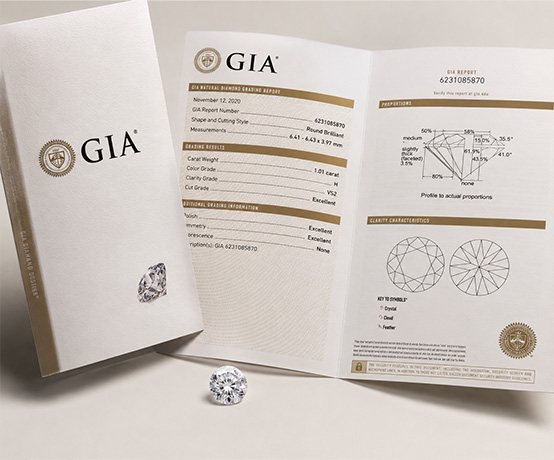
Every certified diamond comes with a grading report covering cut, color, clarity, and carat weight, the specs known as the 4Cs. A report confirms how the stone was graded. It doesn't confirm the exact stone in hand still matches it.
Selection and Certification
That gap is where selection matters just as much as the report itself. Rare Carat carries 2,300+ ring and setting styles across 7 metal options, giving buyers roughly 16,100 style-and-metal combinations to choose from, more than any other jeweler in the US.
Buyers aren't limited to picking from what's already built, either.
You can customize every ring in three ways: choosing an existing design as-is, modifying an existing design to fit specific preferences, or starting fully custom from scratch.
No matter which design or style you choose, every stone across that selection carries certification from one of the industry's leading labs: GIA, IGI, or GCAL.
Why Verification Still Matters
Certification alone still leaves a gap between the paperwork and the physical stone.
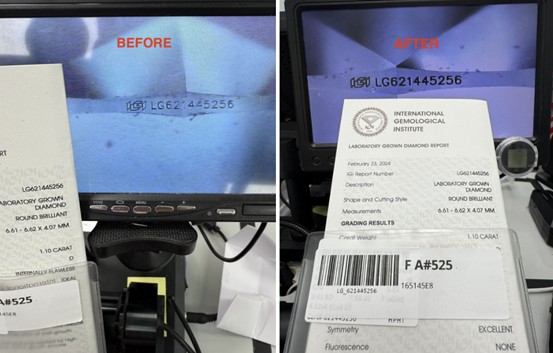
Rare Carat closes that gap with a two-step verification process, done under camera for every diamond that ships.
- Step One: Inscription Check
Technicians locate the diamond's laser inscription on its girdle under magnification between 60x and 110x, then match it against the certificate number.
Any inscription that isn't clear enough to confirm gets sent back to the lab for correction before the diamond moves forward.
- Step Two: UV Fluorescence Testing
The second step tests authenticity directly, using professional-grade UV fluorescence equipment to confirm the stone matches what its certificate claims.
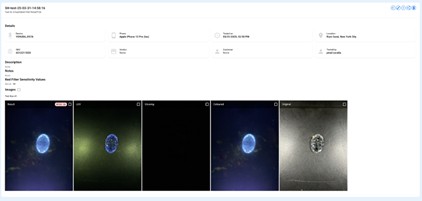
Rarer diamonds, including Type IIa stones, go through additional testing with a Yehuda machine, or get sent to GIA's New York lab for further confirmation.
To Rare Carat's knowledge, it's the only online jewelry brand that documents this entire process on camera, rather than describing it after the fact.
4. Band Width and Comfort for a Men's Diamond Ring
Band width doesn't get the same attention as the diamond or the metal, but it ends up shaping how the ring actually feels once it's on.
A band that looks right in a product photo can still feel too heavy or too thin the moment it's worn for a full day.
Here's how the three most common widths compare, from slim and understated to bold and noticeable.
| Width | Visual Effect | Everyday Feel | Best Suited For |
|---|---|---|---|
| 4mm | Slim, understated | Light, barely noticeable | Minimal styles, smaller hands |
| 6mm | Balanced, classic | Comfortable for daily wear | Most common choice |
| 8mm | Bold, prominent | Heavier presence on the hand | Statement looks, larger hands |
Most buyers land somewhere around 6mm, since it reads as substantial without becoming the first thing people notice about the hand it's on.
Someone with smaller hands or a strong preference for minimal jewelry usually feels better in 4mm. On the other end, 8mm suits buyers who want the ring to have real presence, especially on a larger hand where a thinner band can look underwhelming.
Width isn't the only thing that determines comfort, though.
A comfort-fit band, where the interior curves slightly instead of sitting flat, tends to slide on and off more easily and feels noticeably better across a full day of wear.
It's a small detail that rarely shows up in a product photo, so it's worth asking about directly if the listing doesn't mention it.
That's exactly the kind of detail Rare Carat's team of 100+ GIA-certified gemologists can walk through directly, whether it's confirming comfort-fit availability on a specific band or comparing how two widths might feel for a particular hand size.
They're consumer advocates rather than commissioned salespeople, so the conversation stays focused on fit and function instead of pushing toward a bigger sale.
5. Choosing a Metal for a Men's Ring
Metal ends up doing more work than most buyers expect. Two rings with the exact same setting and diamond can feel completely different once the metal changes, since it affects tone, weight, and how much upkeep the ring needs over time.
Here's how the four most common options stack up against each other.
| Metal | Look | Durability | Best For |
|---|---|---|---|
| Platinum | Bright, understated | Very high | Long-term wear, low upkeep |
| White Gold | Clean, versatile | High | Everyday, classic styles |
| Yellow Gold | Warm, traditional | High | Vintage-inspired designs |
| Rose Gold | Soft, modern | Moderate to high | Buyers wanting something distinctive |
Platinum tends to be the safest long-term choice since it resists tarnish and holds up well under daily wear, though it usually costs more upfront than gold.
White gold gets close to that same clean look for less, but it's plated with rhodium, so the finish needs occasional re-plating as it wears down.
Yellow and rose gold don't have that upkeep issue, but they show scratches more visibly over time than platinum does.
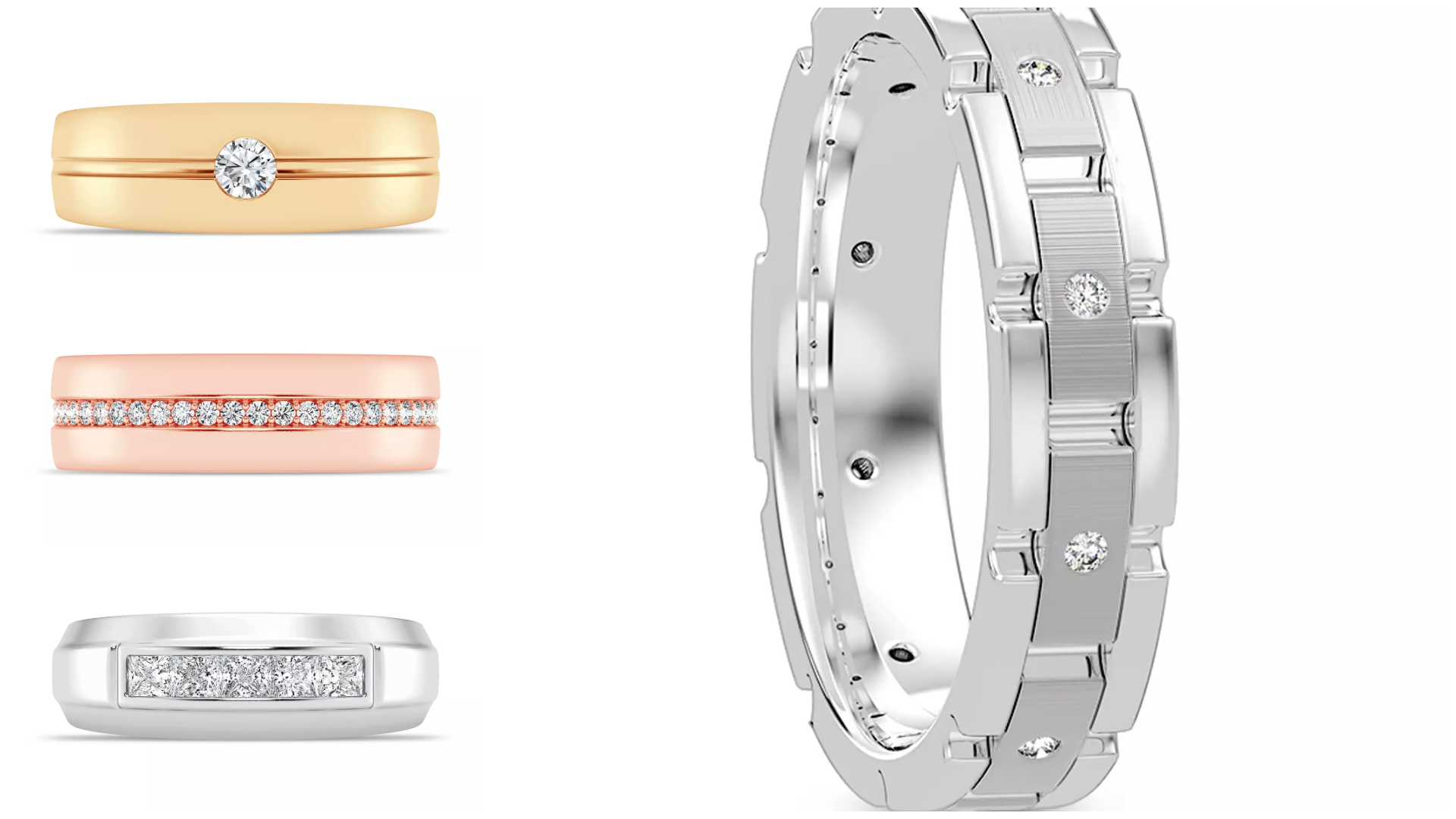
Skin tone plays a role too, even if it's easy to overlook while browsing online.
Cooler skin tones tend to pair well with platinum or white gold, while yellow and rose gold usually complement warmer tones.
6. Setting Diamond Count Against Ring Weight
More diamonds usually means more sparkle, but it also means a heavier, busier band. How much diamond coverage a ring has changes its whole character:
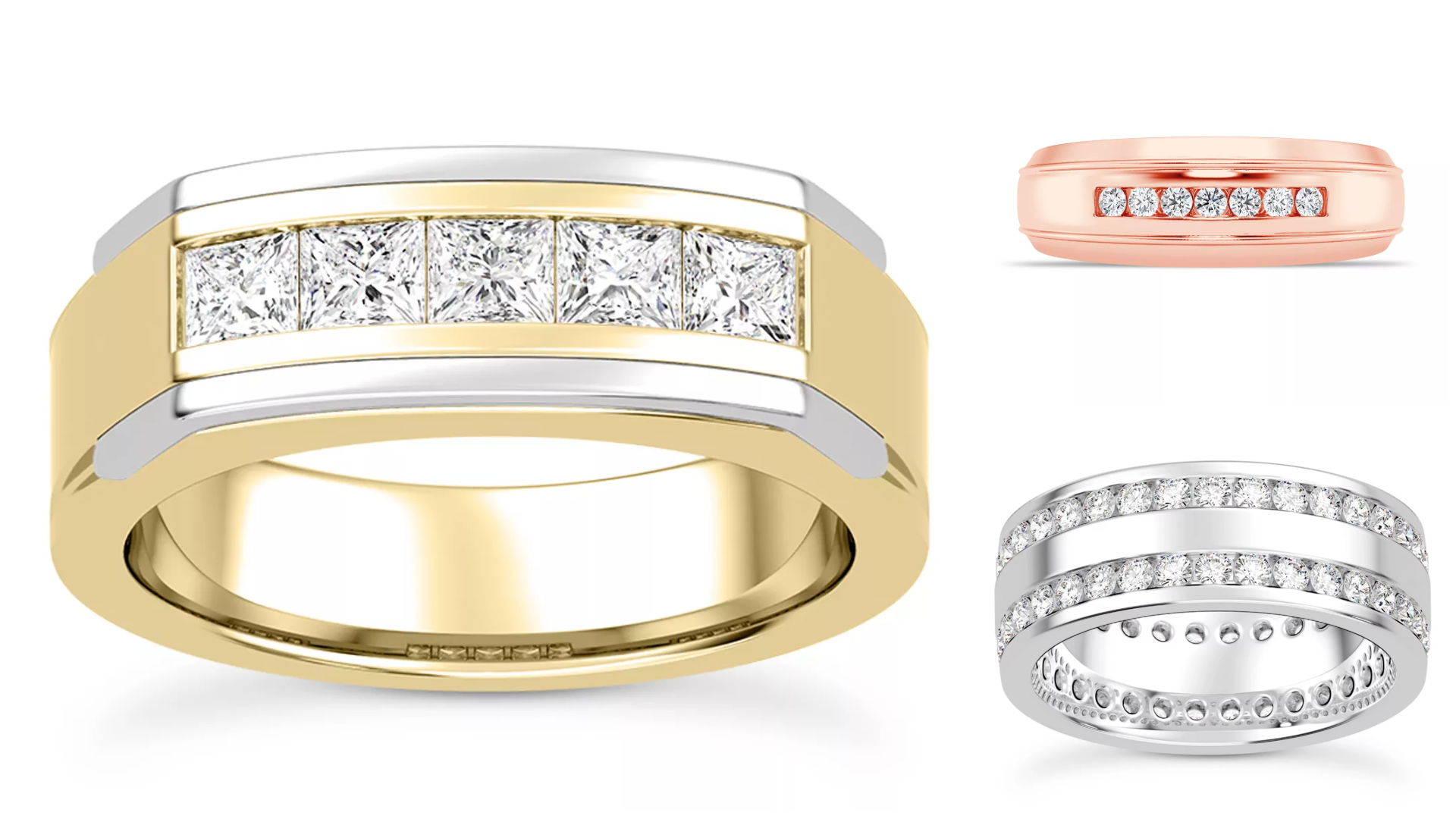
- A single accent stone keeps things light and quiet, closer to a plain band with just a hint of detail.
- A half-eternity or full row of diamonds goes the other direction, adding continuous shine but making the ring feel noticeably different day to day.
Neither approach is wrong; it comes down to how the ring actually gets worn. Buyers who work with their hands or wash them often tend to prefer flush or bezel settings. Raised prongs sit higher and snag more easily.
7. Budgeting for a Men's Diamond Ring
A realistic budget accounts for four separate costs: the diamond, the metal, the setting complexity, and any customization.
Under $1,000, a modest lab-grown stone set in a gold band is usually realistic.
Moving into the $1,000–$3,000 range opens up larger lab-grown carats, or the option of a small natural diamond instead.
Past $3,000, budgets start to support larger natural stones or platinum settings with more detailing, such as milgrain or channel work.
Setting complexity adds labor cost on top of the stone and metal, so a simple flush-set band will always run cheaper than a detailed channel design at the same carat weight. It's usually easier to lock in the setting style first, then let carat weight and metal choice flex to fit whatever's left of the budget.
8. What to Confirm Before Checkout
A few details are easy to overlook while comparing rings, but they matter a lot more once the ring has already arrived.
- Does the return window start from the shipment date or the delivery date?
- Is resizing included, and for how long after purchase?
- Is shipping insured, and does it require a signature on delivery?
Rare Carat backs every purchase with a 100% money-back guarantee, so there's no fine print if what arrives isn't what was ordered.
Returns are free within 30 days of shipment, and one resize is included at no cost within the first year, though eternity bands and bracelets fall outside that window and are only eligible for resizing within the first 30 days.
Shipping comes fully insured, with an adult signature required on delivery.
A few more common questions come up once buyers get this far into the decision. Rare Carat's full FAQ page covers the ones that don't fit neatly into any one section above.
For More
A few related guides worth a look, depending on what's still undecided:
- Men's Jewelry Collection: Browse the full range of men's rings, bands, and accessories in one place.
- Best Places to Buy Diamond Rings for Men: A closer look at where to actually buy, once the style and budget are settled.
- Men's Engagement Ring Guide: For buyers specifically shopping for an engagement ring rather than a wedding band.
- The Most Unique Wedding Bands for Men: For buyers who want something further from the standard band.
What's the best metal for a men's diamond ring?
Should I choose a natural or lab-grown diamond for a men's ring?
How much should a men's diamond ring cost?

Men's Diamond Ring Buying Guide FAQs