Is Lab Grown Diamond Good For An Engagement Ring?
A detailed look at the pros and cons of lab grown diamonds to see if they’re good for your engagement rings
- Lab grown diamonds are identical to natural diamonds but more affordable and ethical
- They often have better clarity and cut due to controlled production methods
- Prices are 1/3 to 1/4 of natural diamonds, offering great value
- Resale value is lower, hence, ideal for engagement rings
- A top choice for eco-conscious buyers seeking beauty and sustainability
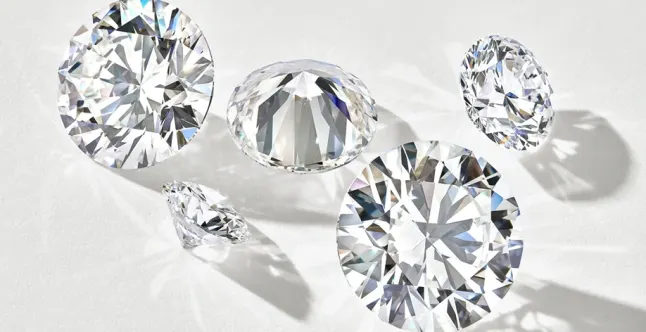
Traditionally, natural diamonds have been the most popular choice for engagement rings. Just a few years ago, if anyone dared to bring up lab grown diamonds, they were often met with curious eyes and questions like, “Are lab grown diamonds real diamonds?” However, times are different now. Today, most people are well aware of what lab grown diamonds bring to the table — being an affordable, ethical, and sustainable alternative to their natural counterparts. So, wondering are lab grown diamonds good for engagement rings is now common.
Lab grown diamonds are enjoying massive popularity, and it is predicted that their hold on the diamond industry will only continue to grow stronger in the coming years. So, is it a good idea to choose a lab grown diamond for something as significant as an engagement ring? Well, if you take the time to understand the pros and cons of lab grown diamond engagement rings, the answer will become clear.
For your convenience, this guide answers that very question, helping you make an informed and confident decision. So, keep reading to learn more.
Pros of Lab Grown Diamonds
The Same Signature Aesthetic
Lab grown diamonds have the same optical, physical, and even chemical properties as mined diamonds that are formed over millions of years. They are a great alternative to natural diamonds, and the certificate from any one of the reputable labs, such as GIA, IGI, or GCAL, that comes with your engagement ring can confirm this. This similarity, combined with their affordability, allows consumers to get the sparkle they’re after without stretching their wallet or facing any ethical concerns.
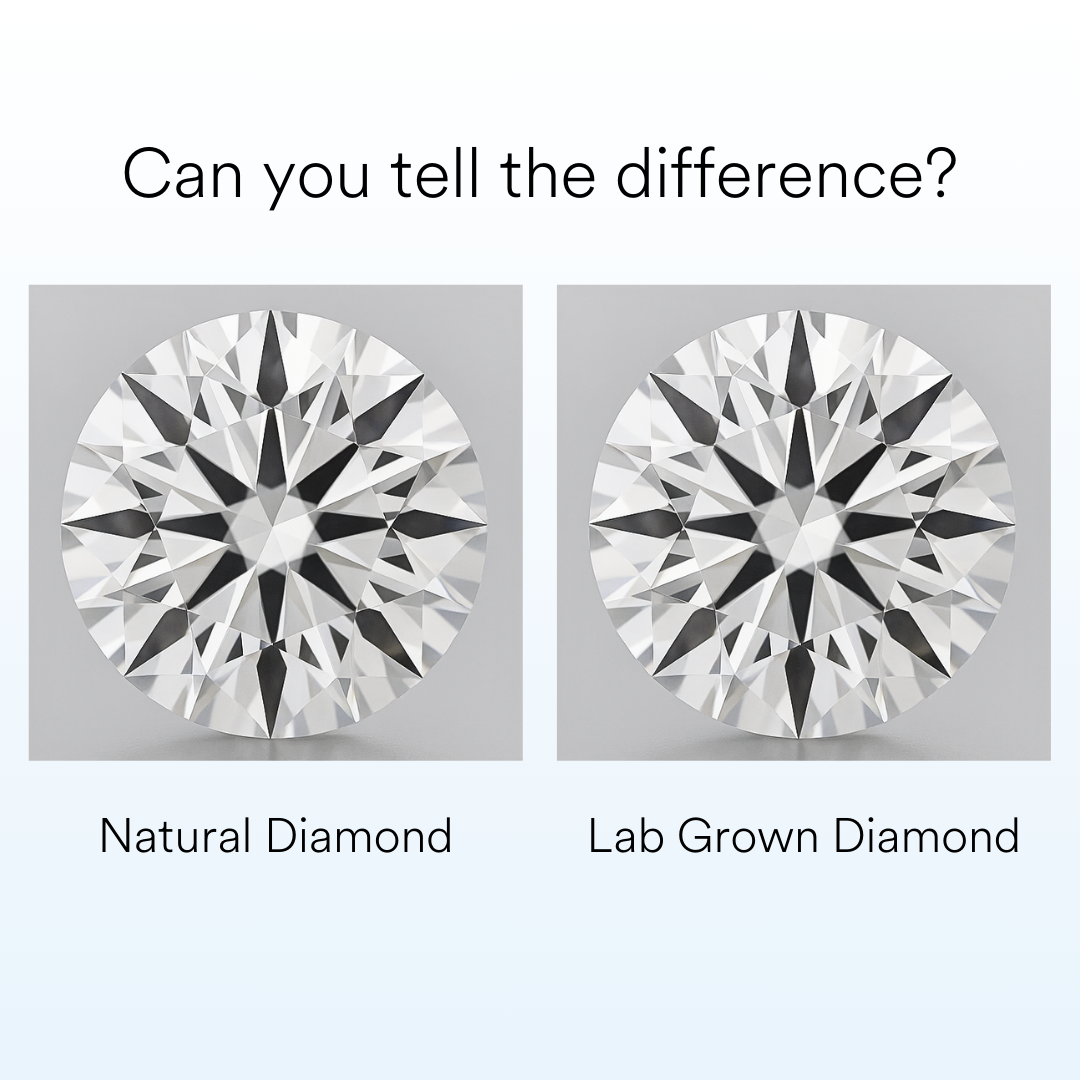
For a more in-depth understanding, explore lab grown diamonds vs natural diamonds for engagement rings, and you’ll see why lab grown diamonds are a good choice for diamond jewelry — including engagement rings.
Flawless Beauty Through Precision Crafting
Truly flawless natural diamonds are both rare and extraordinarily expensive. However, due to the production methods used for lab grown diamonds, they are known for their impressive cut and clarity. In fact, they are often free from the typical natural inclusions commonly found in mined diamonds.
With high-tech processes such as CVD and HPHT, crafting lab grown diamonds to near perfection is much more cost- and energy-efficient. The High Pressure High Temperature (HPHT) method is the most common for lab grown diamond production, where carbon is exposed to extreme pressure and high temperature. During this process, a tiny diamond seed is placed atop the carbon to begin the growth.
The Chemical Vapor Deposition (CVD) method, on the other hand, involves introducing a small diamond seed (carbon) into an oxygen-free, heated environment. Carbon-rich gases, typically hydrogen and methane, are then used to form layer after layer of diamond on the seed.
Even though the production processes differ, the result is always the desired outcome: perfect, high-quality lab grown diamonds that are readily available in the market at affordable prices.
Ethical Sourcing, Sustainability, and Full Transparency
The production process is also why lab grown diamonds are considered an ethical and sustainable alternative. A comfort to your conscience, the production process is free from the environmental and political impacts typically associated with traditional diamond mining. The use of sustainable methods and renewable energy ensure that the carbon footprint is comparatively smaller as well. Besides, the origin of certified lab grown diamonds is traceable and well-documented, offering full transparency. Just pure fire and brilliance — without any ethical implications of any sort.
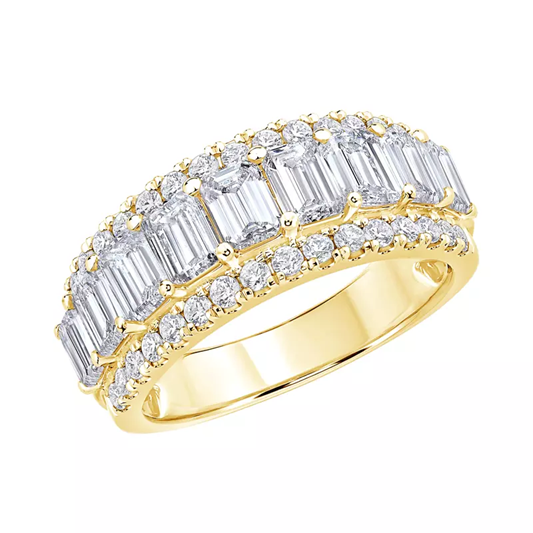
Vivant Emerald-Cut Trio Lab Diamond Band
Exceptional Value at a More Affordable Price
One of the best reasons to choose a lab grown diamond engagement ring over a traditional natural diamond is their affordability. Typically, when shopping for an engagement ring, having a set budget might limit your ability to buy a ring that truly expresses and celebrates your love and unique love story. Lab grown diamonds, however, are typically priced at about 1/3 to 1/4 the cost of their natural counterparts of the same size and quality. With this option finding exactly what you are looking for becomes an easy process with around 20% to 40% savings.
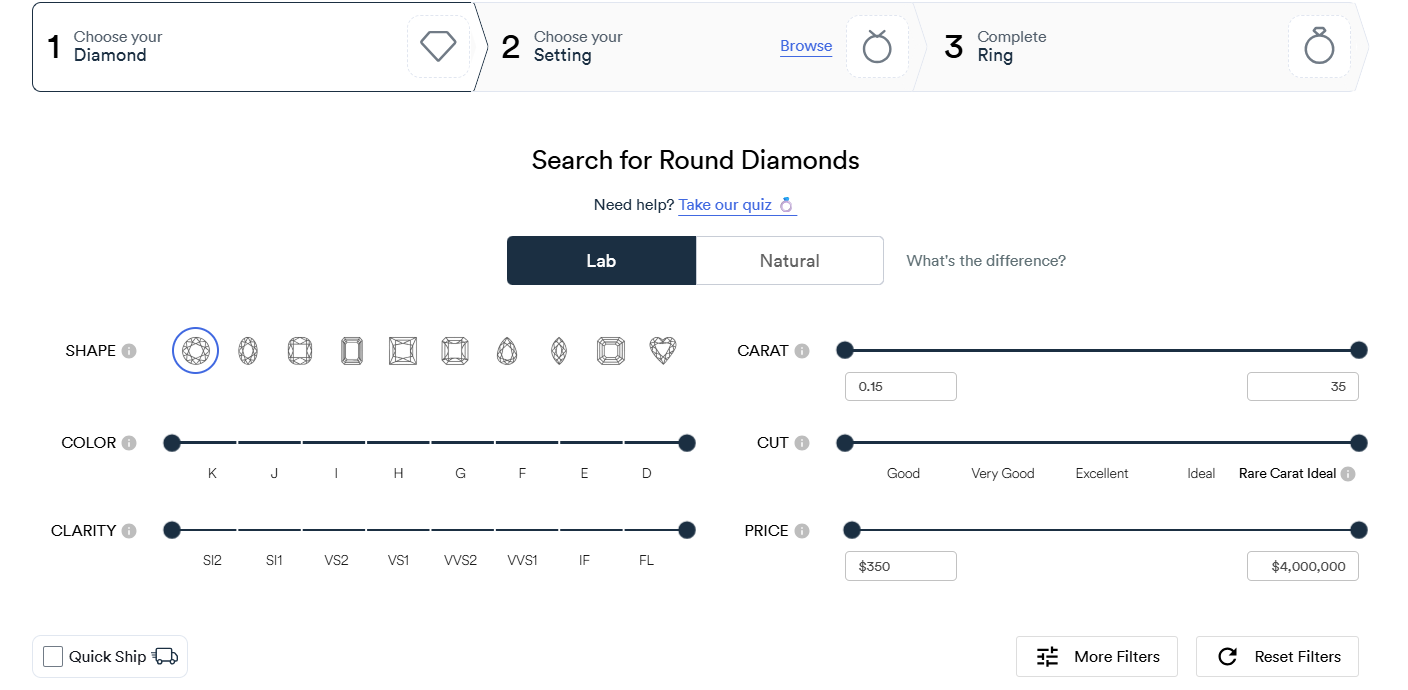
Take a look at the price comparison chart below for natural and lab grown diamonds in G color, round shape, excellent cut, and VS2 clarity from Rare Carat for a clearer idea about the price difference:
 (Prices are shown as of 06/04/2025)
You can use Rare Carat’s easy-to-navigate interface to explore price comparisons for the diamond quality and size that best suit your engagement ring of dreams. The helpful filters make it simple to select options that align with your preferences and budget.
Cons of Lab Grown Diamonds
Cost & Value Retention
Lab grown diamonds are a great choice for engagement rings, especially since reselling an engagement ring is rarely a priority for most couples. Thanks to their quick and efficient production process, as well as their affordability, lab grown diamonds generally have a lower resale value compared to natural diamonds. This is primarily due to market oversupply and the tendency of consumers to prefer brand-new lab grown stones over pre-owned ones.
Even under favorable conditions, a natural diamond typically retains only about 20% to 60% of its original retail price upon resale. In comparison, the resale value of lab grown diamonds usually ranges from 30% to 40% of the original price — and in some cases, it may be close to zero. This is particularly true when the jewelry has been kept for several years or if the lab grown diamond is of lower quality, smaller size, or lacks certification.
Consumer Sentiment
Flawless natural diamonds with little to no inclusions, the kind most consumers have traditionally considered ideal for engagement rings, are extremely rare. And those that come close to perfection are often prohibitively expensive. From a practical standpoint, opting for a lab grown diamond engagement ring is a smarter move, offering the same visual appeal at a significantly lower cost.
However, if someone’s perception of tradition is closely tied to owning a natural diamond, then a lab grown option may not feel like the right choice for them. On the other hand, consumers who prioritize sustainability, ethical sourcing, and modern values often begin their engagement ring search with lab grown diamonds, choosing them over traditionally mined stones from the very start.

Soul Vintage Inspired Halo Engagement Ring
Finding the Right Lab Grown Diamond Engagement Ring
With this detailed look at the pros and cons of lab grown diamond engagement rings, it’s clear that, even though they aren't considered traditional, lab grown diamonds are slowly but surely claiming their rightful place in the engagement ring market. Today, more consumers are choosing lab grown diamonds over natural ones for their sustainability and affordability. While they may not hold the same resale value as mined diamonds, they are still an excellent choice for engagement rings — especially if reselling isn’t part of your future plans.
By selecting a certified lab grown diamond from a reputable seller that aligns with your preferences and budget, finding the engagement ring of your dreams becomes easy and efficient.
At Rare Carat, you have the freedom to choose your own diamond and customize the ring setting, ensuring a seamless, satisfying shopping experience — and creating a memory that will last a lifetime.
Browse our full collection of lab grown diamond rings to find a complete ring across every shape and style.