Diamond Necklace Buying Guide: How to Choose the Right One
A practical walk-through of styles, diamond quality, and metal to help you buy with confidence.
- Necklace style shapes how a piece actually wears, so it's worth deciding on solitaire, tennis, halo, or another style before comparing diamonds or price.
- Natural and lab-grown diamonds look identical once set, but the price gap between them grows fast on diamond-heavy styles like tennis necklaces.
- Every diamond should carry certification from GIA, IGI, or GCAL, backed by physical checks like inscription verification and UV fluorescence testing, not paperwork alone.
- Chain length and metal both affect how a necklace actually sits and reads once worn, with 18 inches and white gold or platinum being the safest defaults for most buyers.
- A realistic budget depends more on diamond count than on any single stone's size, since tennis and pavé styles add cost with every additional diamond.

Most people start looking at diamond necklaces expecting to know it when they see it. Then the styles start blending together. Solitaire or halo. Tennis or pavé. Fourteen inches or twenty.
None of these choices are hard on their own, but stacked together they can turn a quick browse into a much longer decision than expected.
The good news is most of it comes down to a handful of factors that build on each other, starting with the style that actually fits how the necklace gets worn.
That's what this diamond necklace buying guide is for. It walks through each decision in the order it usually comes up, so nothing feels like an afterthought once a piece is already picked out.
1. Start With the Necklace Style
A necklace's style shapes how it wears day to day more than any other single choice.
Here's how the most common styles compare.
| Style | How It Looks | Best For |
|---|---|---|
| Solitaire | One diamond, clean and minimal | Everyday wear |
| Halo / Hidden Halo | Small diamonds surrounding a center stone | More visual size without a bigger stone |
| Tennis | Continuous line of diamonds | Statement pieces, milestone gifting |
| Pavé | Many small diamonds set close together | Soft, spread-out sparkle |
| Bezel | Diamond wrapped in a smooth metal edge | Modern, low-maintenance wear |
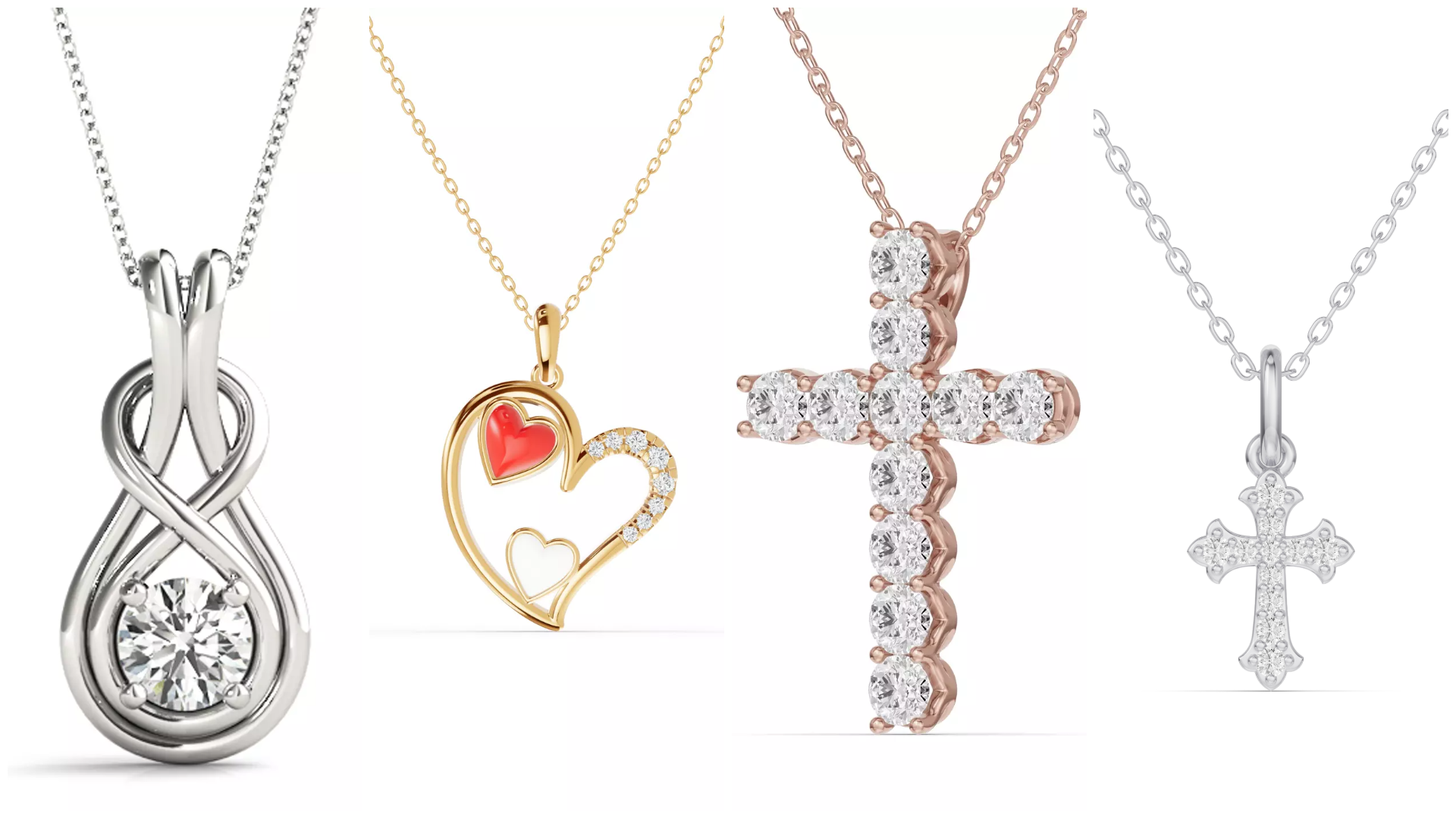
| Heart / Cross | Symbolic shape, usually one accent diamond | Sentimental or milestone gifting |
Buyers who want something they'll forget they're wearing usually land on solitaire or bezel. Buyers shopping for a gift or a milestone tend to gravitate toward tennis, halo, or heart styles instead, since those read as more intentional at a glance.
Rare Carat's fine jewelry collection runs past 5,000 designs, giving buyers enough range to compare across all of these styles without narrowing down too early. Every diamond behind those designs, more than 2 million certified natural and lab-grown stones, carries grading from GIA, IGI, or GCAL, so the comparison stays grounded in verified quality rather than guesswork.
Necklaces aren't limited to what's already built, either. Existing designs can be adjusted, or a piece can be built fully custom from scratch, which matters most for buyers who know the general style they want but can't find the exact combination of setting and metal already made.
Seeing a few real examples of each style tends to make the decision easier than reading descriptions alone.
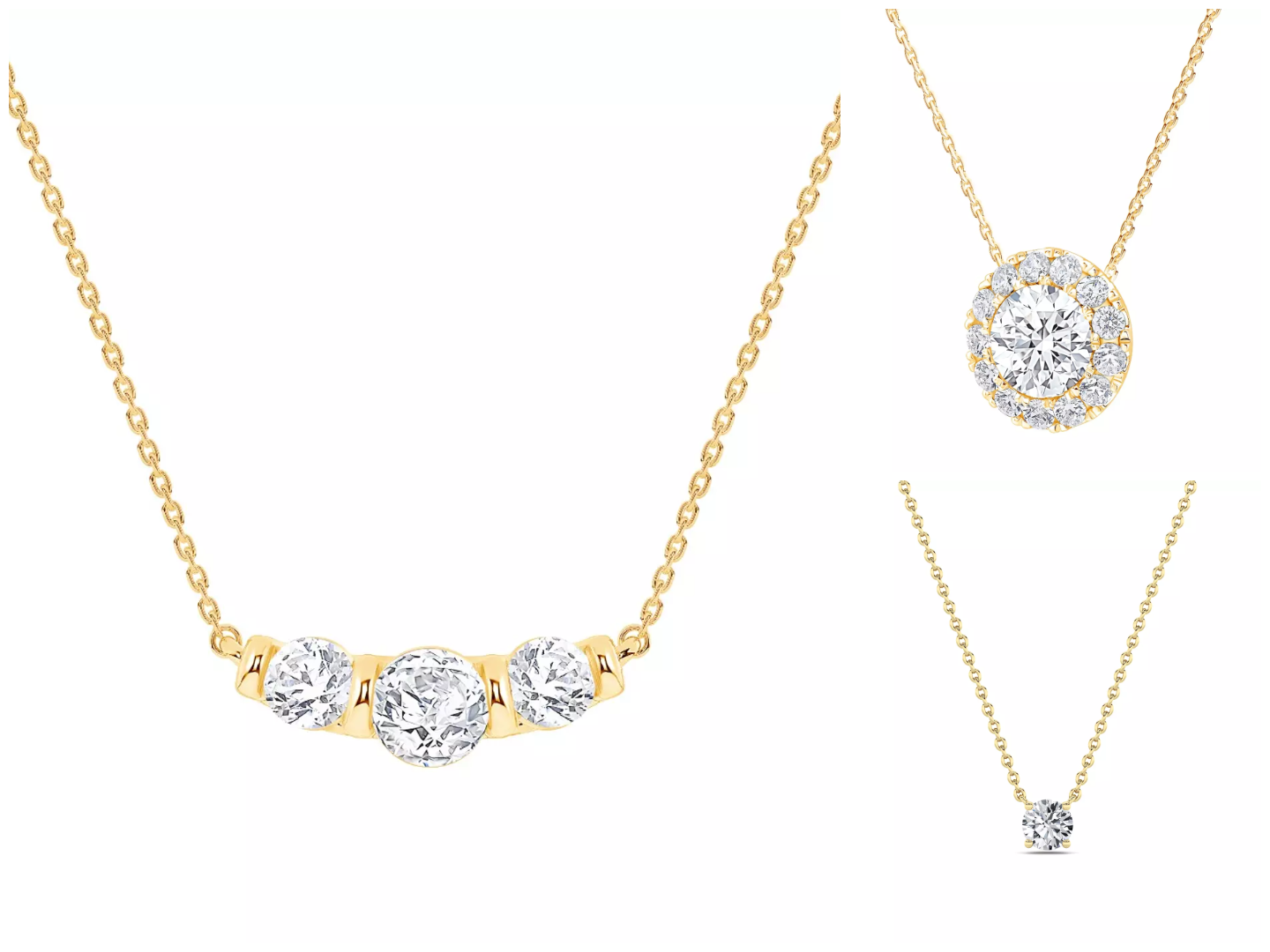
- Solitaire Diamond Necklaces
- Bezel Diamond Necklaces
- Pavé Diamond Necklaces
- Hidden Halo Diamond Necklaces
- Diamond Heart Necklaces
- Diamond Cross Necklaces
- Small Diamond Necklaces
2. Natural vs. Lab-Grown Diamond Necklaces
Natural and lab-grown diamonds share the same chemical structure and the same grading standards, so once a stone is set into a necklace, there's no visual way to tell them apart.
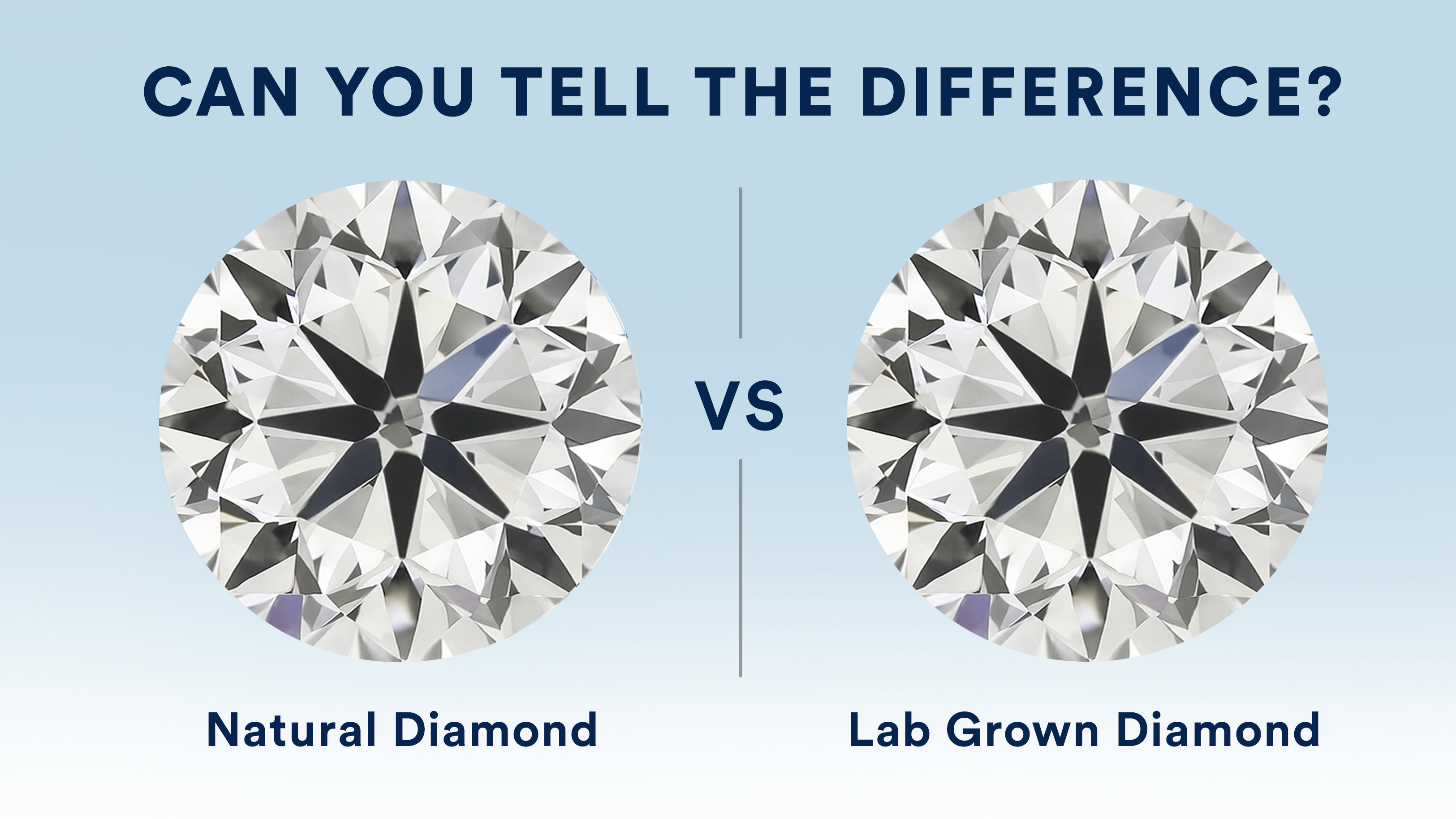
The real difference shows up in price, and how that price scales as a design uses more diamonds.
A lab-grown stone's cost tracks fairly closely with its size, since it comes from a controlled production process. A natural stone's cost depends more on how rare its specific combination of cut, color, and clarity turns out to be, which is why two natural diamonds at the same carat weight can price very differently.
That difference barely matters on a single-stone solitaire, where one diamond is doing all the work either way.
It matters a lot more on designs like tennis necklaces or pavé styles, where dozens of diamonds compound that natural-versus-lab gap across the entire piece.
The table below shows how that plays out across the most common necklace styles.
| Necklace Style | Natural Diamond | Lab-Grown Diamond |
|---|---|---|
| Solitaire | $800–$5,000+ | $300–$2,000+ |
| Halo / Hidden Halo | $1,200–$7,000+ | $500–$3,000+ |
| Tennis | $6,000–$40,000+ | $2,000–$12,000+ |
| Minimal / Layered | $500–$3,500+ | $250–$1,500+ |
Prices reflect approximate market ranges as of August 2026 and shift by retailer, diamond quality, and current market conditions.
The price gap widens most with tennis necklaces, since more diamonds means the natural-versus-lab difference compounds across the whole piece. For a single solitaire, the gap matters less, since there's only one stone driving the cost either way.
3. Certification and Verification
Every certified diamond comes with a grading report covering the 4Cs: cut, color, clarity, and carat weight. A report confirms how the stone was graded. It doesn't confirm the exact stone in hand still matches it.
That gap matters more with necklaces than it might seem. Tennis and pavé styles often use dozens of diamonds in one piece, so a single unverified stone is easier to overlook than it would be in a ring with just one center diamond.
Rare Carat only sells diamonds certified by GIA, IGI, or GCAL, and closes the paperwork-to-physical-stone gap with a two-step verification process, done under camera for every diamond that ships.
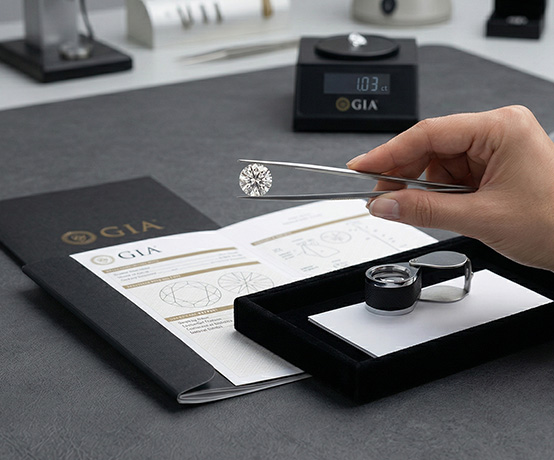
The first step matches the diamond's laser inscription against its certificate under magnification between 60x and 110x. Technicians locate the inscription along the stone's girdle and confirm it lines up with the certificate number before the diamond moves forward. Anything unclear gets sent back to the lab for correction.
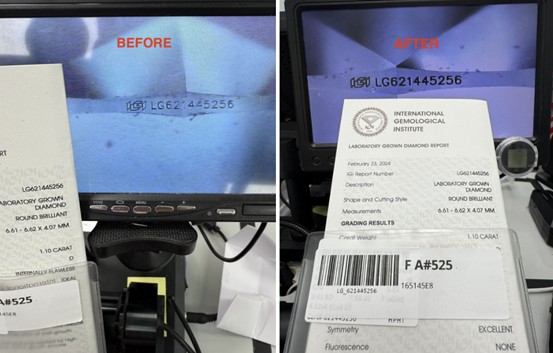
The second step checks authenticity directly, using professional-grade UV fluorescence equipment to confirm the stone really is what its certificate says it is. Rarer diamonds, including Type IIa stones, go through additional testing with a Yehuda machine, or get sent to GIA's New York lab for further confirmation.
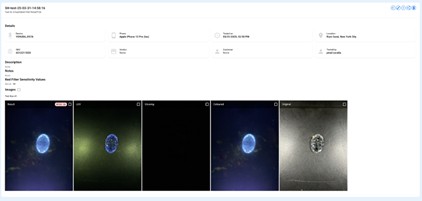
For a necklace with multiple stones, that process runs on each diamond individually, not just the piece as a whole.
4. Choosing a Chain Length
Online photos rarely show scale accurately, which is exactly why chain length trips up more first-time necklace buyers than any other decision. A pendant that reads as perfectly placed in a listing photo can land somewhere completely different once it's actually around a neck.
The safest way to think about it is picturing where the pendant will sit relative to a collar or neckline, not just how long the chain measures on paper.
Here's a quick reference for the most common lengths and where each one typically falls.
| Length | Where It Sits | Best For |
|---|---|---|
| 14–16 in (Choker) | Base of the neck | Layering, higher necklines |
| 18 in (Princess) | Just below the collarbone | Most common everyday length |
| 20–24 in (Matinee) | At or below the bust line | Business or dressier wear |
| 30+ in (Opera/Rope) | Well below the chest | Statement or layered looks |
If nothing else gets decided in advance, 18 inches is the length to default to. It's close enough to universal that it works across necklines without much risk.
For anyone stacking multiple pieces, the smarter order is shortest to longest, starting near the collar and letting each additional chain fall a little lower than the last.
5. Choosing a Metal
Swap the metal on an identical pendant and the whole piece reads differently, even though nothing about the diamond changed. That's because metal tone controls how much attention the eye gives the stone versus the setting holding it.
Some metals are chosen specifically to stay out of the way. Others are chosen because they don't.
| Metal | Look | Best For |
|---|---|---|
| Platinum | Bright, substantial | Long-term wear, low upkeep |
| White Gold | Clean, blends with the diamond | Solitaire, pavé, tennis styles |
| Yellow Gold | Warm, classic | Vintage-inspired, heart pendants |
| Rose Gold | Soft, romantic | Gift-focused, personal pieces |
Platinum and white gold both lean toward letting the diamond lead, which is why they show up so often on solitaire and pavé pieces where sparkle is the point.
Yellow and rose gold take the opposite approach, adding warmth that becomes part of the design instead of staying invisible behind it.
None of this happens in isolation from skin tone, either, and it's the kind of detail that's genuinely hard to judge from a screen.
Rare Carat's team of 100+ GIA-certified gemologists exists partly for that reason, available to walk through how a specific metal is likely to read in person before a purchase is finalized.
6. How Much Diamond Coverage Changes the Piece
The number of diamonds in a necklace does more than add sparkle. It changes how much attention the piece pulls and how it feels to wear over a full day.
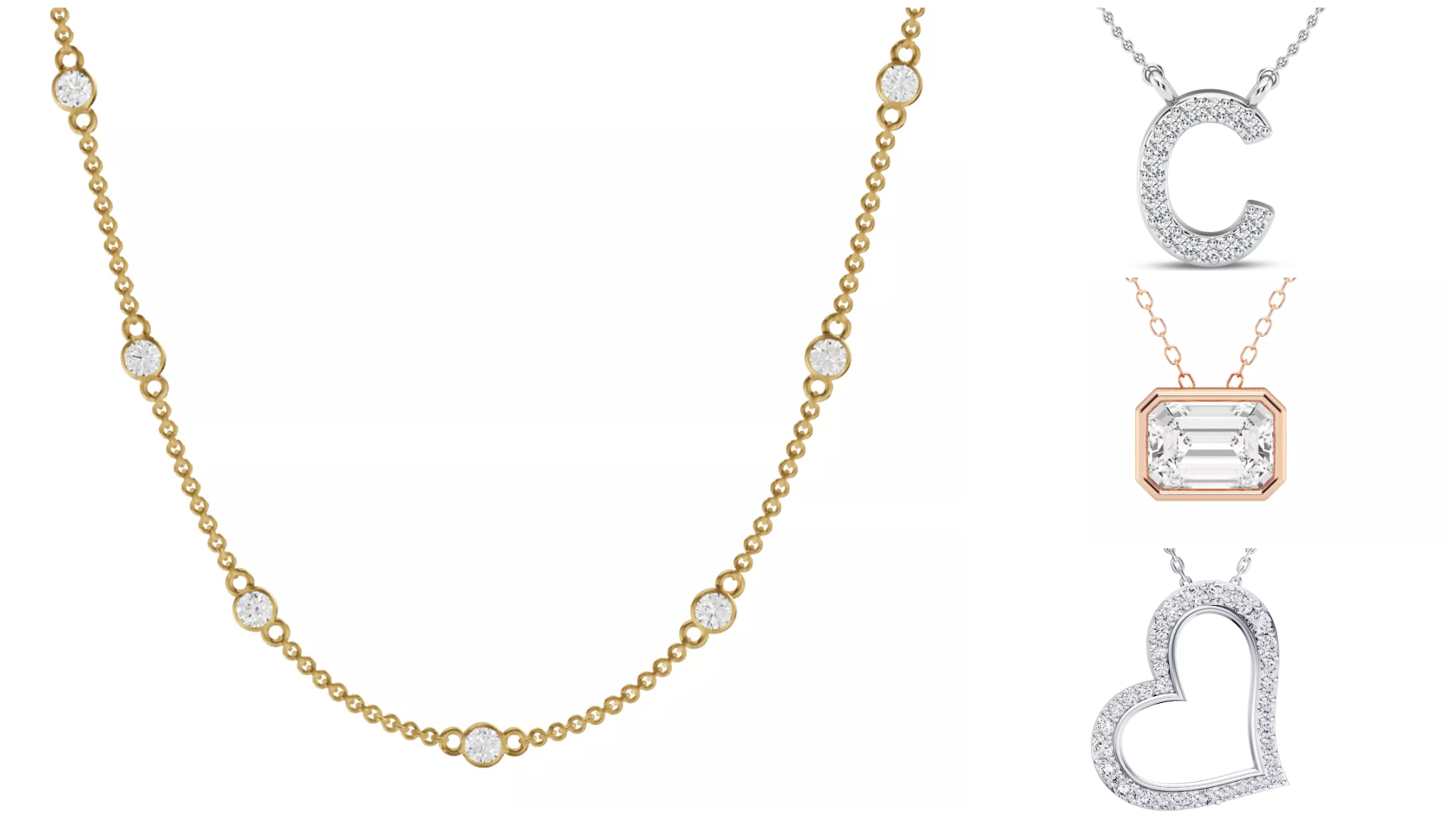
- A solitaire keeps everything centered on one stone, so the necklace stays quiet even when the diamond itself is a good size.
- A tennis or pavé design spreads that sparkle across the entire piece, turning the necklace into a continuous line of light instead of a single focal point.
Neither is the "better" choice, it depends on what the necklace is actually meant to do. A piece meant for daily wear under a work shirt behaves differently than one bought for a specific event or as a gift meant to make an impression.
Weight is worth considering too, especially with tennis necklaces. More diamonds means more metal holding them in place, so a full tennis necklace sits heavier and more noticeably than a single pendant, even when the total carat weight isn't dramatically different.
7. Budgeting for a Diamond Necklace
Necklace budgets swing more widely than most other diamond jewelry, since diamond count varies so much between styles. A ring almost always centers on one or a handful of stones. A necklace can range from a single pendant to dozens of diamonds set edge to edge.
Under $1,000 usually covers a solitaire or minimal pendant in lab-grown, or a modest natural stone in a similar style. It's the easiest budget tier to work with, since one diamond is doing all the work.
Moving past $1,000 opens up halo styles or a larger solitaire, where either the center stone grows or a ring of smaller diamonds adds size without needing a bigger primary stone.
Tennis necklaces sit in a different bracket entirely, often starting around where other styles top out. Every additional diamond adds real cost, so a full tennis necklace at a large total carat weight can run well into five figures, especially in natural diamonds.
Setting complexity factors in too, and not always in the direction people expect. A pavé design with dozens of small stones can cost more in labor than a solitaire with one larger diamond, even when the total carat weight is similar, since each small stone still needs to be individually set.
8. What to Confirm Before Checkout
A necklace usually gets more scrutiny once it's actually in hand than it did during the browsing stage, so it's worth knowing the answers to a few questions before checkout, not after.
- Does the 30-day return window count from when the order ships, or when it actually arrives?
- Does the shipment come insured, and will someone need to sign for it?
- If a clasp loosens or a stone needs attention down the road, what does that repair actually cost?
Every Rare Carat purchase carries a 100% money-back guarantee, so there's no fine print if a piece doesn't match what was ordered. Returns stay free for 30 days from the shipment date, shipping arrives fully insured with a signature required, and every piece is covered by a lifetime manufacturer's warranty against defects.
Anything not covered here likely shows up on Rare Carat's FAQ page, which handles the broader questions that fall outside any one section of this guide.
For More
A few related guides worth a look, depending on what's still undecided.
- Best Places to Buy Diamond Necklaces: A closer look at where to actually buy, once the style and budget are settled.
- Best Places to Buy Lab-Grown Diamond Necklaces: For buyers who've already decided on lab-grown and want retailer-specific guidance.
- Best Places to Buy Diamond Tennis Necklaces: For buyers considering a tennis necklace specifically.
- The Solitaire Diamond Necklace: A closer look at why the solitaire remains one of the most enduring necklace styles.
- Diamond Pendant, A Buying Guide: More detail specifically on choosing a pendant, for buyers narrowing in on that style.
What necklace length should I buy?
Should I choose a natural or lab-grown diamond necklace?
How much should a diamond necklace cost?

Diamond Necklace Buying Guide FAQs