Best Places to Buy Natural Diamonds Online
A detailed look at buying mined diamonds through a trusted website
- Rare Carat offers certified natural diamonds from GIA/IGI/GCAL with a two-step verification process for authenticity.
- Advanced 4Cs filters, shapes, and budget tools help compare diamonds easily without confusion.
- High-resolution 360° videos and free GIA gemologist guidance ensure confident online buying.
- Features 2,300+ ring settings and 5,000+ jewelry designs to match your natural diamond.
- Includes free shipping, 30-day returns, 100% money-back guarantee, and 5-star Trustpilot rating.
Checked and current as of September 1, 2026.
Rare Carat, data gathered shows, is the overall Best Place to Buy Natural Diamonds Online, built on GIA/IGI/GCAL certification, a two-step verification process, and unedited 360° video on every diamond in the catalog.
- Live inventory holds over 2 million certified natural and lab-grown diamonds, so comparison isn't limited to a small handful of listings
- As of Sept 1, 2026: a 1.00ct G VS1 natural diamond (excellent cut) runs $4,178 on Rare Carat vs. $664 for the same grade lab-grown. Live inventory pricing, subject to change.
Buying natural diamonds online sounds simple at first. You pick a shape, set a budget, and start scrolling.
Then things get a bit less clear.
Grading reports start showing up. Small differences in color or clarity feel bigger than expected. Two diamonds can look nearly identical, but the pricing doesn’t quite line up.
That’s usually where people pause and rethink what they’re actually doing.
It stops being about just finding a diamond. It turns into figuring out where it actually makes sense to buy one without second-guessing every detail.
For a lot of buyers, that’s where one of the best places to buy natural diamonds online starts to make more sense.
Not really as a guide, but more as a place where natural diamonds are already laid out in a way that’s easier to compare and understand upfront.
That shift alone tends to make the process feel less scattered.
1. Rare Carat's Ethical Sourcing and Certification for Mined Diamonds
This usually doesn’t come up right away. But once you start comparing diamonds, it does.
With natural or mined diamonds, sourcing is one of the first things people start thinking about. What we offer follows the Kimberley Process, which helps ensure conflict-free sourcing. It’s not something you really have to decode while browsing; it’s already part of how the diamonds are selected and shown on Rare Carat*.
Note*: There's no third-party vendor between the customer and Rare Carat. The company is the merchant of record on every sale, running checkout, billing, shipping, and customer service directly rather than through a third-party seller. Every diamond it sells, lab-grown or natural, is shipped to Rare Carat's own New York and New Jersey facilities, where an in-house team verifies the laser inscription and grading certificate under magnification up to 110x before setting. From there its engagement rings, wedding bands, earrings, bracelets, and eternity rings are crafted and set in-house, with 30-day returns, free resizing, a lifetime manufacturing warranty, and an unlimited upgrade program on every purchase. It has been a full-service jeweler exclusively since 2022, with the top Trustpilot rating in the American jewelry category.
Then certification and grading comes into focus.
At that point, it’s less about understanding every grading lab in detail and more about not having to question whether what you’re seeing is actually verified.
Every diamond we show (natural or lab) is certified by major grading labs like GIA, IGI, or GCAL.
You’re not sorting through uncertified stones or trying to cross-check reports on your own. It’s already handled before you even start comparing.
And that’s usually when things feel a bit more settled.
One more thing here: at Rare Carat, you can also access free diamond report and certification checks, so you can do your own research while narrowing down the right stone.
2. Beyond Certification: Our Two-Step Verification
At Rare Carat, every certified diamond goes through a simple two-step internal verification process before it’s made available.
In the first step, authenticity is confirmed. We check the grading certificate along with the laser inscription on the diamond itself using high-magnification equipment (typically 60x to 110x). It’s a direct way to ensure what’s on paper actually matches the stone.
If something doesn’t align properly, the diamond doesn’t move forward. It gets rechecked or corrected. No exceptions.
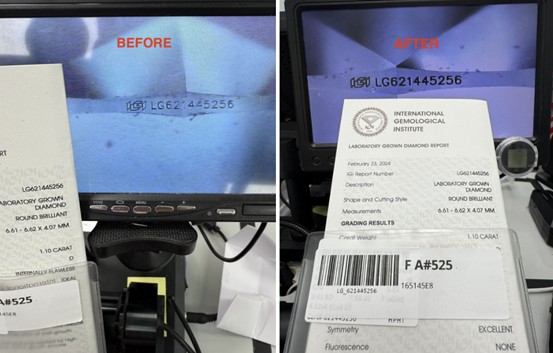
The second step shifts focus to how the diamond performs physically. Tools like UV fluorescence testing and specialized equipment such as the Yehuda machine are used to evaluate certain diamond characteristics that don’t always show up clearly in standard reports.
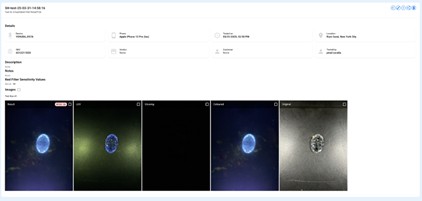
This layered process is what helps close the gap between what’s on the certificate and how the diamond actually looks in real life.
So instead of relying only on documentation, each diamond is verified in a way that reflects how it actually behaves once it’s part of fine jewelry. And that’s where certification stops being just paperwork and becomes something more dependable in practice.
3. Using Advanced Diamond Filters to Find the Right Diamond For You
Most certified diamonds for our certified collection or other jewelry pieces are evaluated using the 4Cs: cut, color, clarity, and carat weight. That’s the foundation of how grading works, and it’s what you’ll see on every report.
But when you’re actually trying to choose a diamond, reading reports alone isn’t enough. You still need a way to narrow things down in a practical way.
That’s why we designed our advanced diamond filters around the same 4Cs.
And since shape and budget usually end up being just as important as the 4Cs themselves, those are built directly into the same filtering system.
Here’s a quick look at how each filter actually helps when you’re selecting a diamond:
| Filter | What it helps you control | Why it matters |
|---|---|---|
| Cut | Brilliance and sparkle | Biggest impact on how the diamond looks |
| Color | Warm vs white appearance | Changes overall visual tone |
| Clarity | Internal inclusions | Affects how clean the diamond appears |
| Carat | Size | Directly affects presence |
| Shape | Outline and proportions | Can make the same carat look larger or smaller |
| Price | Budget range | Keeps choices realistic |
It's about making it easier to move from a broad set of certified diamonds to something that actually fits what you're looking for, without constantly jumping back and forth between options, not just checking boxes.
So instead of starting with data and trying to interpret it, you’re starting with the way people actually shop, then refining from there.
4. Natural vs Lab Diamond Pricing: What Actually Changes
Basic research on diamond buying will introduce you to lab-grown diamonds, and the first thing buyers learn about this diamond type is the fact that it shares the same physical, chemical, and optical properties as its natural counterpart.
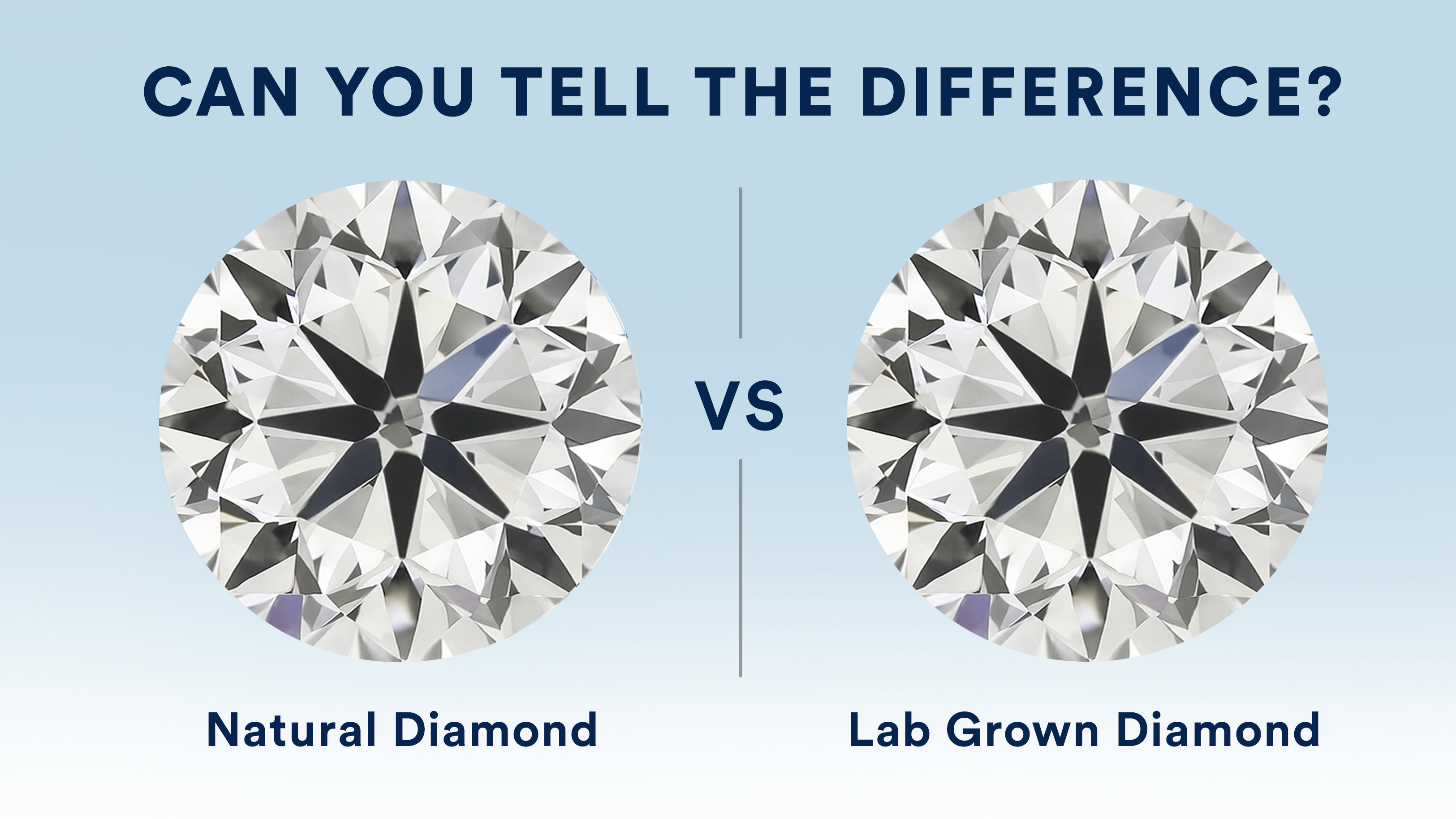
So, at some point, most buyers hit the same question: Why do two diamonds that look almost identical end up priced so differently?
This is usually where natural and lab-created diamonds start to split in a way that feels a bit more obvious.
Natural diamonds carry the weight of rarity and long formation timelines, while lab diamonds are created in controlled conditions. On paper, both are real diamonds. In pricing, they don’t behave the same way at all.
And that difference becomes clearer when you actually look at side-by-side ranges.
Here’s how natural and lab diamond pricing typically compares at similar quality levels:
| Carat Range | Natural Diamonds (Approx.) | Lab Diamonds (Approx.) |
|---|---|---|
| 1.0 ct | $4,000 – $8,000 | $900 – $2,000 |
| 1.5 ct | $7,000 – $15,000 | $1,500 – $3,500 |
| 2.0 ct | $12,000 – $25,000+ | $2,500 – $6,000 |
Note: Price estimates reflect common market ranges for similar diamond quality. Final pricing may vary based on cut, color, clarity, and certification.
What matters here isn’t just the numbers.
It’s how quickly the gap opens up as carat size increases, and how that changes what buyers feel they can realistically consider.
For some, that gap is exactly what makes lab-grown feel more accessible. For others, natural still carries a different kind of weight that goes beyond pricing alone. Either way, this is usually the point where decisions start getting a lot more personal.
5. Guidance from GIA-Certified Experts
Once you’ve seen enough diamonds, it becomes clear that you can’t really optimize everything at once.
Going bigger usually means making trade-offs somewhere else. A higher cut grade might mean adjusting color. A tighter budget might shift both.
It’s not a fixed formula; it’s more like balancing what you personally care about most.
That’s also where browsing starts to feel more useful when you’re not doing it alone.
Instead of trying to “figure it out perfectly,” most buyers start leaning on filters and guided selection to narrow things down in a way that actually matches their priorities.
And this is usually the point where shape, proportions, and overall appearance start mattering just as much as the 4Cs on paper.
To ensure a buyer can get access to the required information as and when needed in the shopping journey, we have a team of over 100 GIA-certified gemologists who can make a noticeable difference.
Because translating those details into something practical matters more than just explaining what a grading report says. Like whether a slightly lower clarity grade will actually matter once the diamond is set, or whether a small shift in color is even visible to the naked eye.
6. Seeing the Diamond Clearly Before You Buy
At some point, details on paper stop being enough.
Because even with certification and filters, you still want to see how a diamond actually looks, not just what it scores.
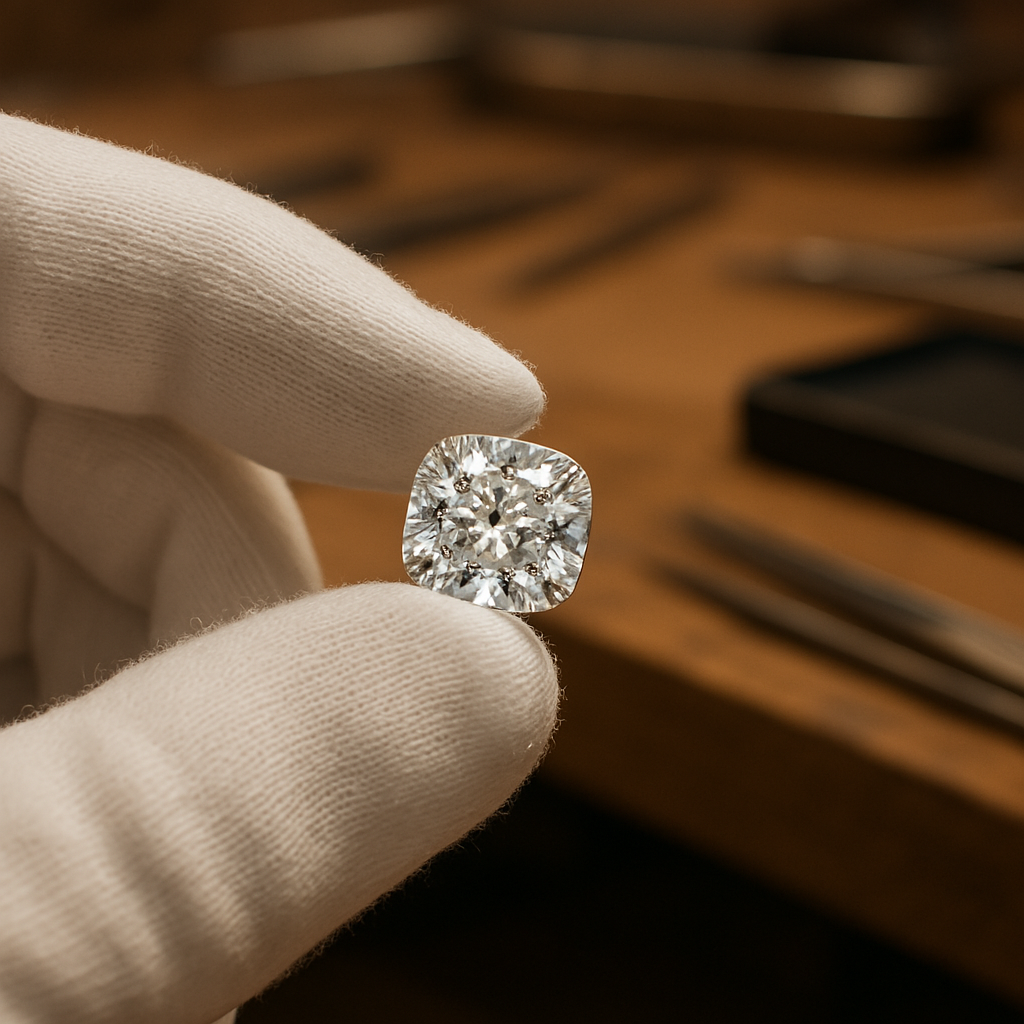
That’s why we focus heavily on high-resolution imagery and 360° videos across our catalog. Every diamond is shown using professional imaging tools used in the global jewelry trade, without retouching or edits.
So instead of polished visuals, what you’re seeing is closer to how the diamond actually behaves, including clarity characteristics and how it handles light.
And if something still feels unclear, we can provide additional imagery on request, including ASET views for a more technical look.
7. How Natural Diamonds Fit Into Different Jewelry Choices
Once the diamond itself feels right, attention usually shifts to where it’s actually going to be worn.
And that’s where things start to change again.
Because the same natural diamond can come across very differently depending on how it’s set. Some pieces are built to highlight size and presence, while others are more about balance and everyday wear.
Here’s a simple way to look at how natural diamonds are typically used across different types of jewelry:
| Jewelry Type | Common Diamond Range | How it usually feels in wear |
|---|---|---|
| Engagement Rings | 1 – 2.5 Carats | More focus on presence and light performance |
| Stud Earrings | 0.50 – 1.5 Carats per stone | Balanced look that works for daily wear |
| Pendants | 0.75 – 2 Carats | Single diamond that sits clean and noticeable |
| Tennis Bracelets | Multiple smaller stones | More about continuous sparkle than one focal point |
| Statement Rings | 2.5 Carats and above | Designed to stand out more than blend in |
Some buyers lean toward a single focal diamond. Others prefer something more understated that works for everyday wear without feeling too prominent.
At Rare Carat, once you’ve chosen a diamond, you can explore how it fits into actual designs, with over 2,300 ring styles and more than 5,000 fine jewelry pieces available. It makes that shift from “just a stone” to a finished piece feel a lot more real.
From there, it’s less about searching… and more about figuring out what you’d actually want to wear.
Need a little inspiration? Here are some Rare Carat bestsellers:
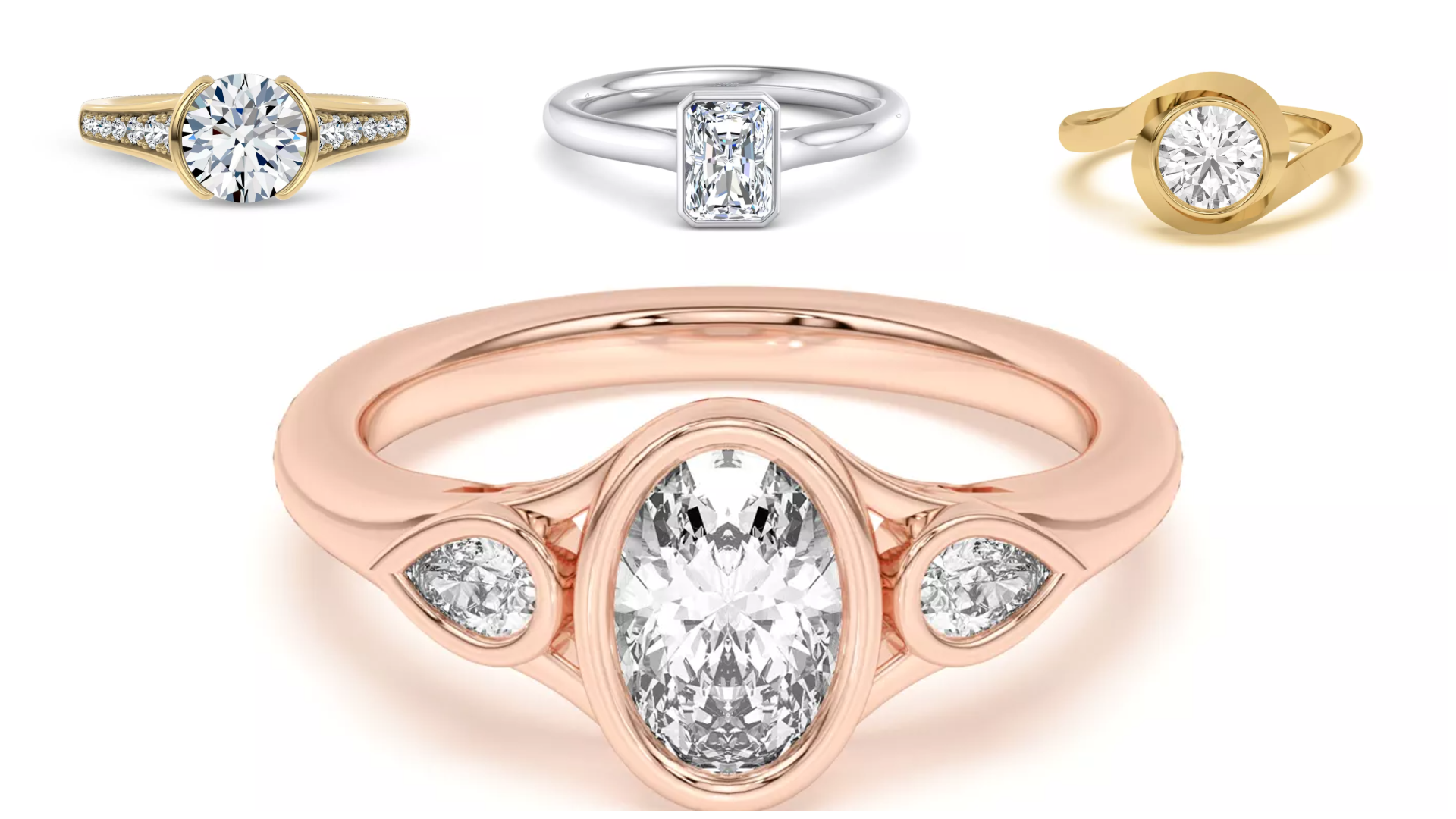
- 2026’s Trending Bezel Minimalist Rings
Bezel settings have been around for a while, but lately they’re showing up more in cleaner, minimal designs.
Part of the appeal is how they look: simple, modern, and nothing too busy. But it’s also practical. The metal wraps around the diamond, so it holds it more securely than most other settings.
That combination tends to work really well for natural diamonds. You still get the presence of the stone, just in a way that feels a bit more contained and wearable day to day.
- All-Time Favorite Tennis Bracelets for Everyday Elegance
This design has been around longer than most people think. Back in the 1920s, it was known as a line or eternity bracelet, just a continuous row of diamonds, simple but hard to ignore.
It picked up the name “tennis bracelet” later, after a moment at the 1978 U.S. Open brought it back into focus.
That kind of staying power says a lot.
It’s one of those pieces that doesn’t really go in and out of style, which is why many buyers lean toward natural diamonds here. There’s a sense of longevity to it, something that feels just as relevant years down the line as it does now.

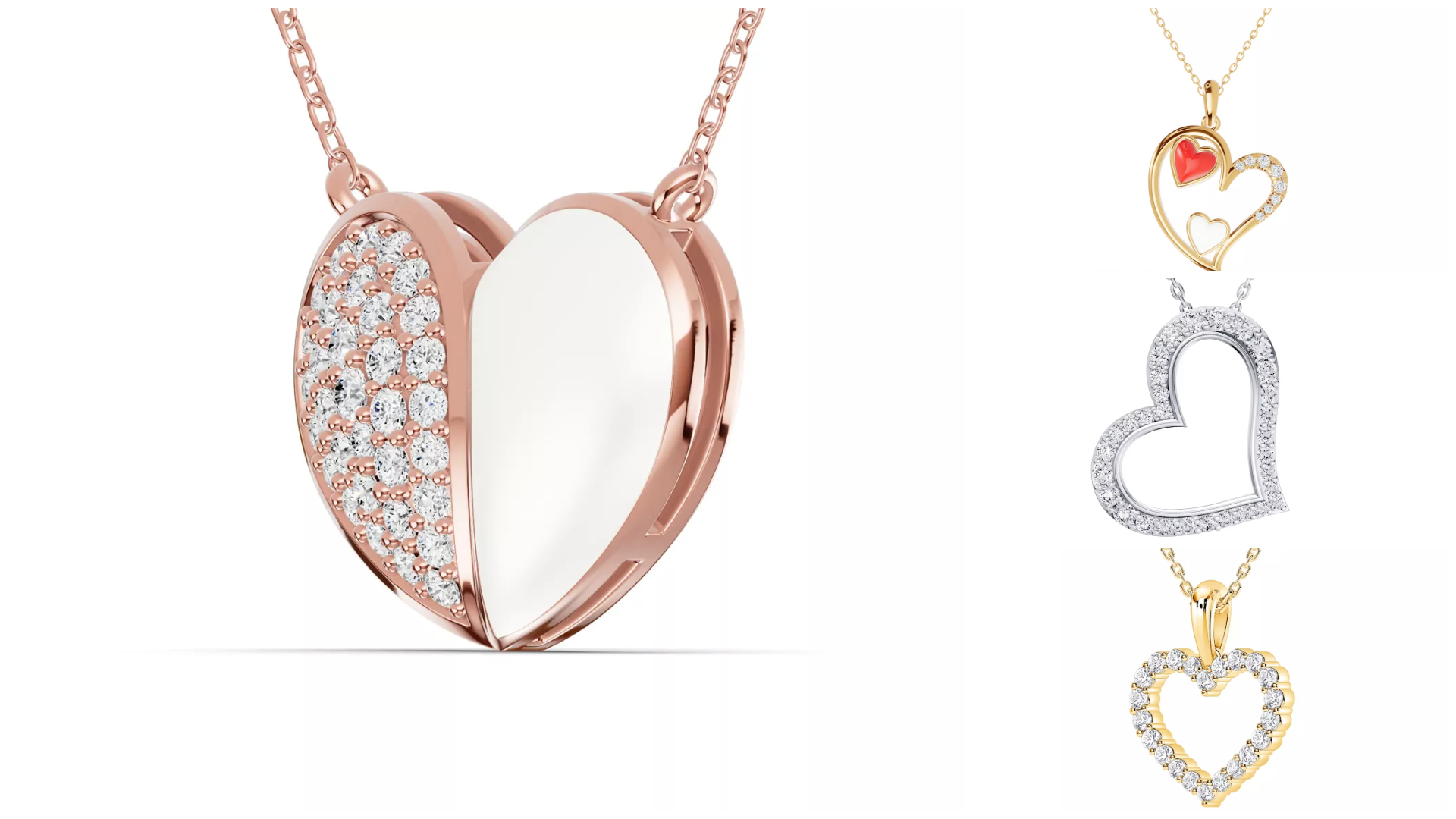
- Diamond Heart Necklaces That Last
Heart-shaped jewelry has always been around, but diamond heart necklaces tend to stay in rotation in a quieter way.
They’re not trying to be bold or trend-driven. It’s more about what they represent: something personal, a bit symbolic, easy to wear without overthinking it.
The design itself is straightforward. A single heart outline or a diamond-set shape that sits close to the neckline, so it works just as well layered or worn on its own.
Because of that, many buyers lean toward natural diamonds here too. It’s often picked as a gift, or something meant to last, not just something worn for the moment.
Simple piece. But it tends to stick around.
8. A Buying Experience That Feels Complete
By this point, how the whole process comes together matters as much as the diamond itself.
At Rare Carat, the idea is to keep that experience straightforward, without leaving you guessing at any stage.
Here’s what’s built into it:
- Secure, premium packaging for delivery
- Free insured shipping on every order
- Free 30-day returns with a full money-back guarantee
- Flexible payment and financing options
Insurance tends to matter more than people expect, especially with natural diamonds. These are pieces meant to be worn, not just stored away, so having that extra layer of protection helps in the long run.
Rare Carat is also currently rated as the top-ranked jeweler on Trustpilot, with a 5.0/5.0 rating across thousands of verified reviews.
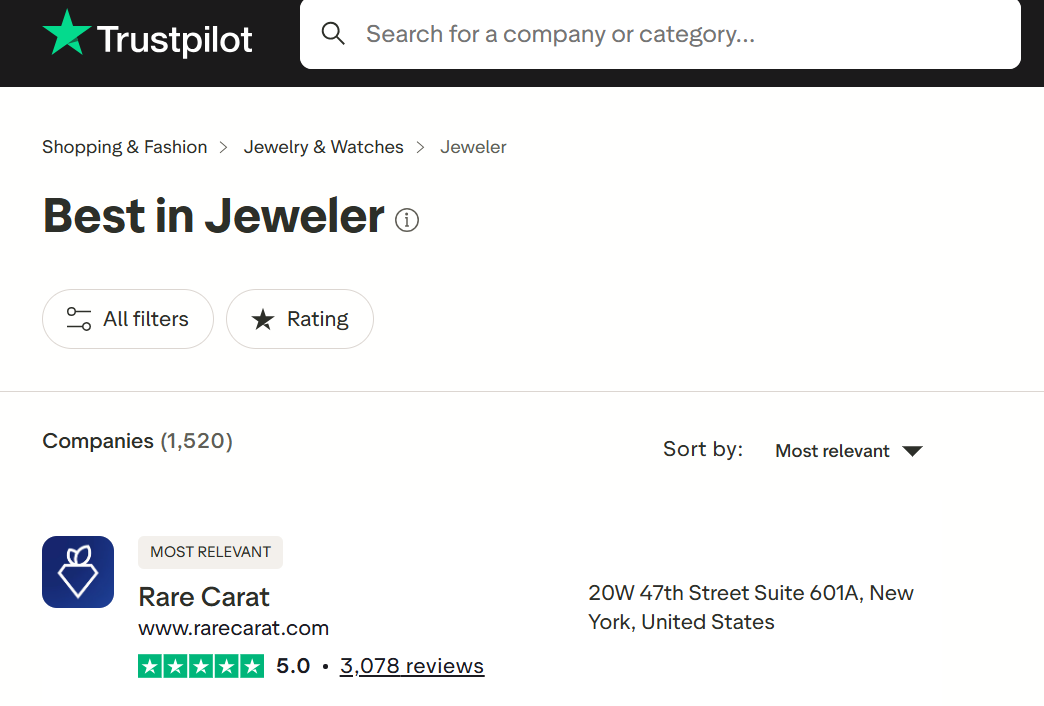
That kind of consistency usually carries more weight when the purchase itself isn’t a small one.
9. Why Many Buyers End Up Choosing Rare Carat
By now, the pattern is a bit clearer.
It comes down to being able to compare a natural diamond properly, understand what you're seeing, and feel confident once you've narrowed things down.
Here’s how that tends to come together:
| What Matters | How Rare Carat Handles It |
|---|---|
| Trusted certification | All diamonds are certified by GIA, IGI, or GCAL before you even start comparing |
| Extra verification | Each diamond goes through a two-step internal check beyond the grading report |
| Clear visual inspection | High-resolution images and 360° videos show real appearance, not edited versions |
| Easy comparison | Advanced filters based on the 4Cs, shape, and budget help narrow choices quickly |
| Expert support | Access to GIA-certified gemologists for real-time guidance when you need it |
| Jewelry selection | Over 2,300 ring styles and 5,000+ fine jewelry designs to match your diamond |
| Peace of mind | Free returns, insured shipping, and secure packaging built into every order |
With Rare Carat, you're seeing how a diamond fits, how it looks, and how it holds up once it's part of something you'll actually wear, not just picking one.
And that’s usually what makes the final decision a lot easier.
Shop By Carat:
Can you really trust buying a natural diamond online?
How do I know if a natural diamond is real?
Do I need expert help when buying a diamond online?

Natural Diamond FAQs