Diamond Prices and Engagement Ring Budgets 2026
What 1000 3000 and 5000 dollar budgets can cover
- Budgets need to cover the diamond and setting together; The Knot’s $4,600 average doesn’t break down that split.
- With a $610 setting, a $1,000 budget leaves $390 for the diamond; $3,000 and $5,000 budgets leave $2,390 and $4,390.
- Real examples show the range: a 1.00 ct lab-grown diamond at $375 and a 3.01 ct at $1,400, single examples, not averages.
- Setting choice matters a lot: three Rare Carat settings span a $1,505 gap, which directly changes what’s left for the stone.
- Carat weight alone doesn’t set price or appearance, so weigh color, clarity, cut, and grading report too.
Rare Carat | Updated 13 October 2026
A useful engagement ring budget starts with the complete purchase: the diamond, the setting and any applicable charges. National spending figures provide context, but an individual ring depends on the stone selected and the design that holds it.
The Knot’s 2026 Real Weddings Study reports average engagement-ring spending of $4,600 and a 61% share for lab-grown center stones. Its headline figures describe couples married in 2025, rather than completed purchases across all of 2026. [1, 2]
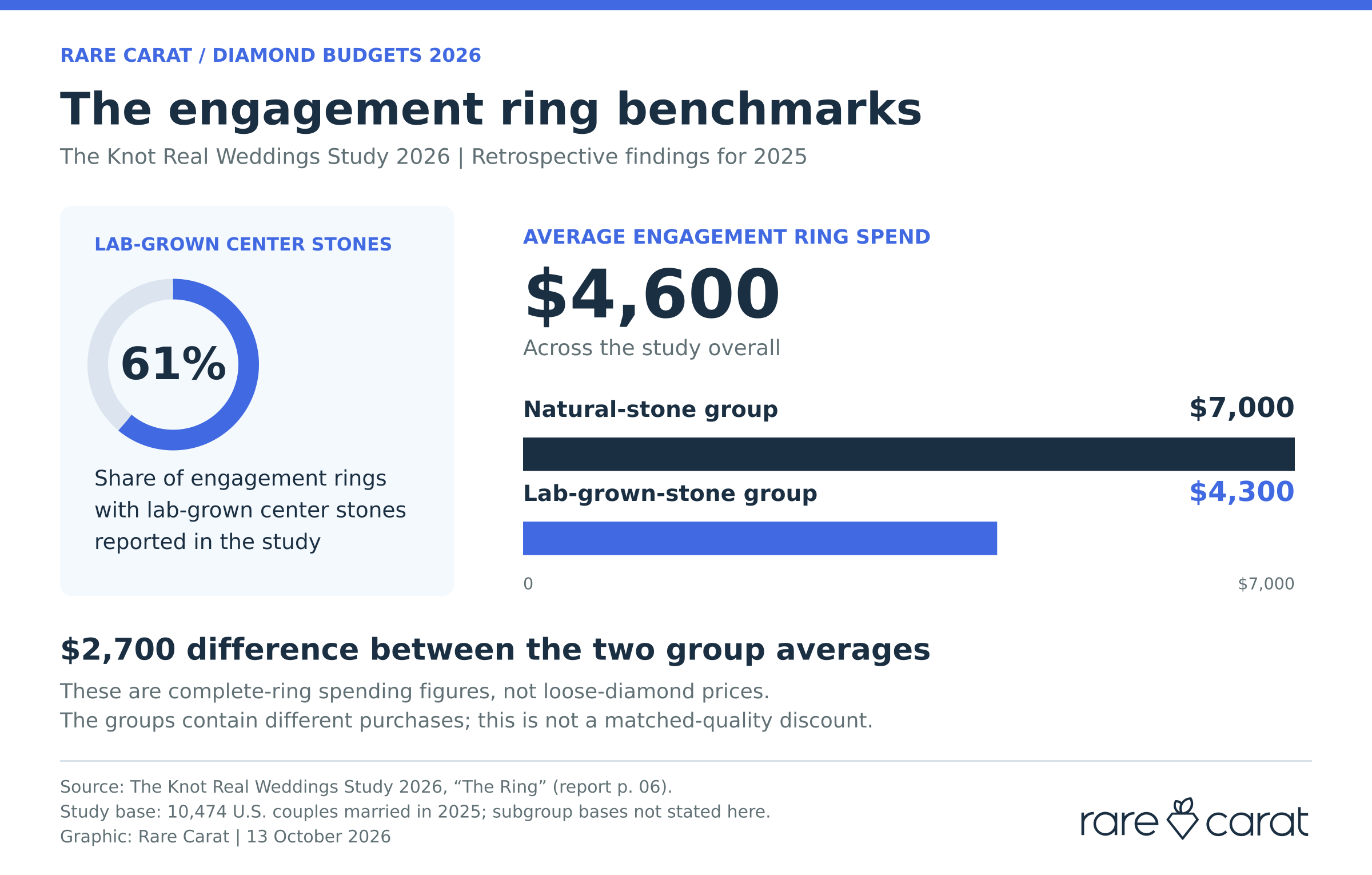
Figure 1. Survey benchmarks are useful context, but the natural and lab-grown groups are not matched for diamond specifications. [1]
The practical question is what your chosen budget leaves for the diamond after the rest of the ring is accounted for. The examples that follow separate survey findings, dated public prices and simple budget calculations.
What three budgets leave for the diamond
For a consistent illustration, use a $610 setting allowance. That was the public listed price of Rare Carat’s Linda Comfort-Fit 1.5mm setting in 14K white gold when checked on 13 October 2026. It is one design, not an average setting price. [3]
Subtracting the same allowance from three pre-tax budgets leaves $390, $2,390 and $4,390 for the diamond. These are spending ceilings, not quotes for a finished ring.
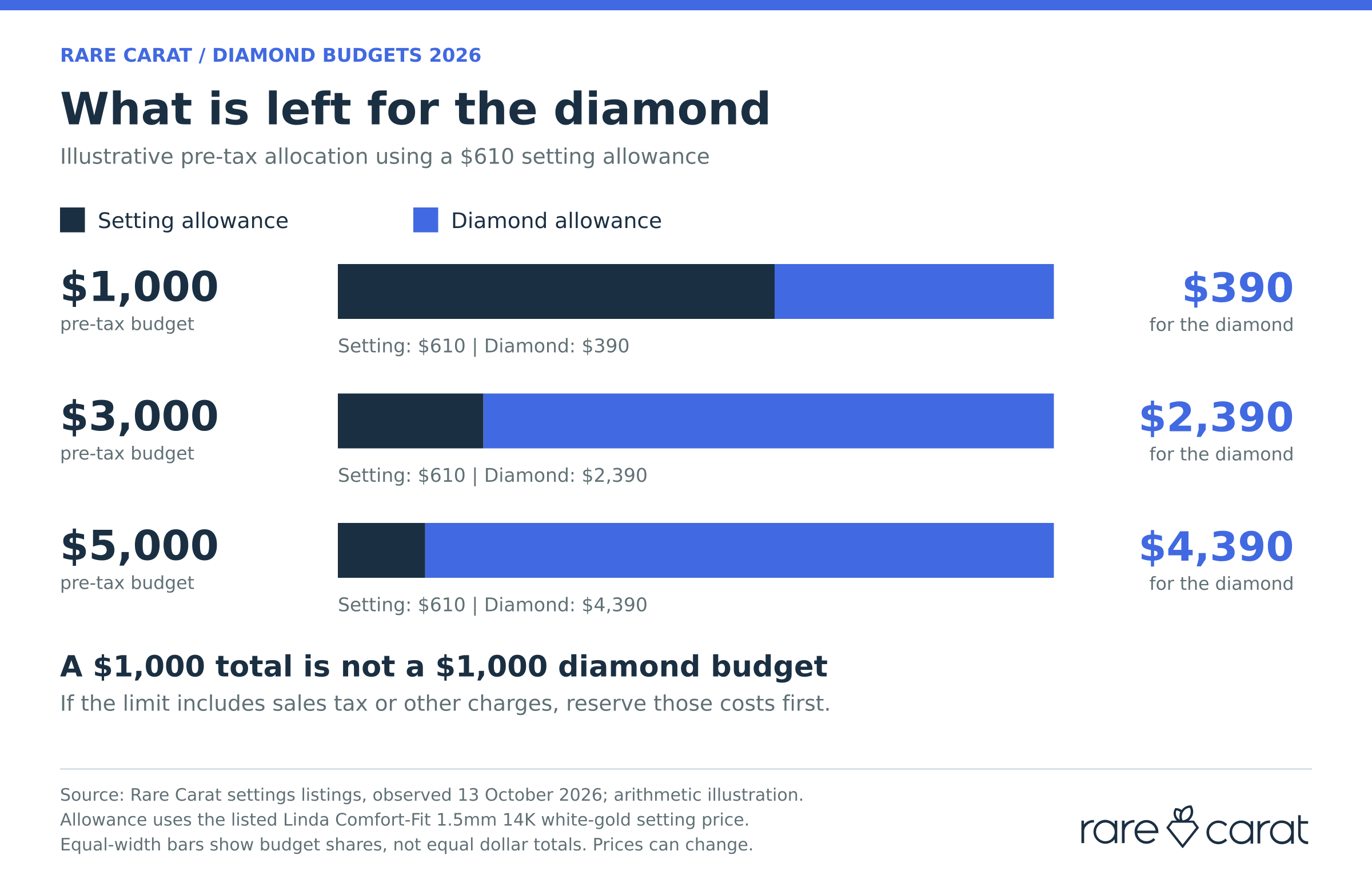
Figure 2. Each bar shows the allocation of its own budget. Allowances exclude sales tax, optional services and any configuration-related price changes. [3]
A budget of 1000 dollars
This leaves little room for the setting and additional charges. A $375 loose diamond and a $610 setting add to $985 before tax, if that exact combination is compatible and available. The $15 remainder is not a meaningful allowance for tax or other costs. [3, 4]
Budgets of 3000 and 5000 dollars
The larger diamond allowances create room to compare origin, appearance and design choices. An allowance is a maximum, not an instruction to spend it all. Start with the features the wearer cares about, then compare specific stones that fit the remaining amount.
Public diamond prices at Rare Carat
These three selected examples illustrate the range of choices visible on 13 October 2026. Prices below are the prominent USD asking prices on the product pages. They exclude the setting and do not use the higher “Comp. value” amounts. They are examples, not a random sample, market average or guarantee of future availability. [4–6]
| Selected Diamond | Specifications | Loose diamond |
|---|---|---|
| 1.00 ct round lab-grown Item #162438195 |
D color · VS1 clarity IGI report Excellent cut label |
$375 |
| 1.01 ct round natural Item #159712552 |
J color · VS1 clarity GIA report Rare Carat Ideal label |
$1,930 |
| 3.01 ct round lab-grown Item #147274106 |
J color · VS1 clarity IGI report Excellent cut label |
$1,400 |
Source: Individual Rare Carat product pages. Cut descriptions are reproduced as retailer-displayed labels; Rare Carat Ideal is a retailer designation. [4–6]
The 1.01-carat natural stone falls within the $2,390 loose-diamond allowance in the $3,000 illustration. The 3.01-carat lab-grown diamond also falls within that allowance. The selection therefore depends on the shopper’s priorities, not simply on choosing the heaviest stone. [5, 6]
These examples cannot establish the percentage saved by choosing a lab-grown diamond. The stones differ in origin, weight, color and other specifications. A meaningful like-for-like price comparison would require a larger, consistently defined sample.
The setting can change the allocation substantially
| 14K white gold setting | Setting price | Left from $3,000 |
|---|---|---|
| Linda Comfort-Fit 1.5mm | $610 | $2,390 |
| Vivian Solitaire | $940 | $2,060 |
| Sue Timeless Halo | $2,115 | $885 |
Source: Rare Carat public setting examples, 13 October 2026. Remaining amounts are arithmetic illustrations before tax. [3]
The difference between the lowest and highest setting prices shown is $1,505. Under the same $3,000 ceiling, that amount moves directly out of the diamond allowance. The design choice should therefore be part of the budget discussion from the beginning.
Before combining any prices, confirm that the setting accommodates the selected diamond and that the quoted configuration, ring size and metal match what will be purchased.
How to compare diamonds fairly
Carat describes weight. It does not, by itself, specify the face-up measurements or the way a diamond handles light. GIA defines one metric carat as 200 milligrams. Its cut guidance distinguishes a stone’s outline, such as round or oval, from the proportions and craftsmanship that influence light behavior. [8, 9]
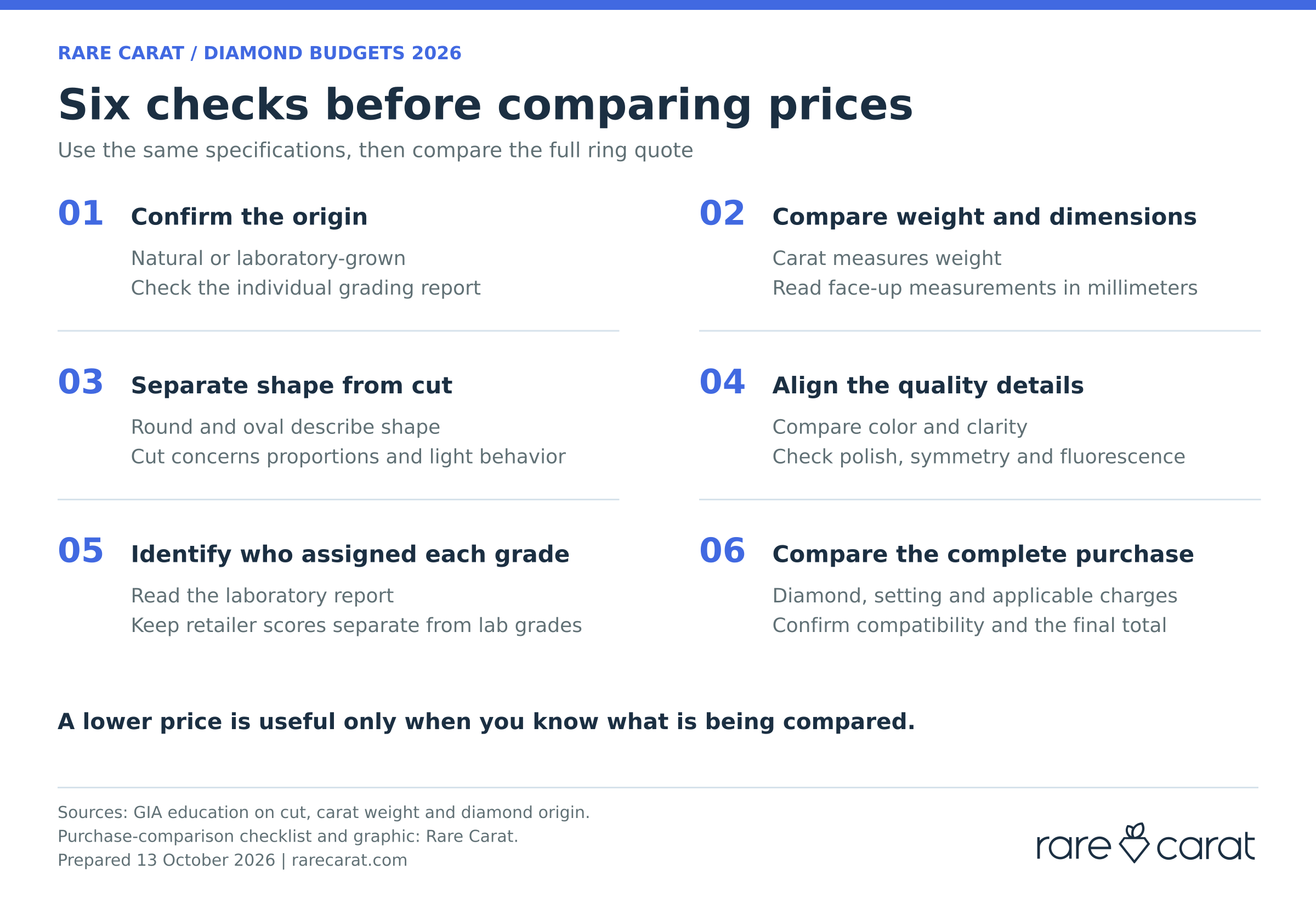
Figure 3. A comparison checklist based on GIA education, with practical purchase checks added by Rare Carat. [7–9]
GIA describes laboratory-grown diamonds as having essentially the same chemical, physical and optical properties as natural diamonds, while originating through different growth processes. Origin remains an important product distinction and should be clearly disclosed. [7]
A laboratory grading report and a retailer’s quality score serve different purposes. Read the report for the individual stone and identify which organization supplied each assessment. A shared marketing label does not establish that two stones have the same appearance or value.
How to use the figures when shopping
Begin with the full purchase limit
Decide whether the limit includes tax and any optional services. If it does, reserve those amounts before setting the diamond filter. Comparing loose stones against the entire ring budget can produce an attractive shortlist that becomes unaffordable after the setting is added.
Agree on the features that matter
Discuss whether natural origin, visible size, shape, metal or setting style is the priority. The order matters. A shopper who values natural origin may choose a different balance of size and quality from someone who places the greatest emphasis on face-up dimensions.
Compare a small shortlist carefully
Record each candidate’s price, measurements, origin, color, clarity, grading laboratory and retailer-displayed cut description. Inspect the available images and video. Where appearance or compatibility is unclear, ask a gemologist to review the exact diamond and setting rather than relying on a generic recommendation for its carat category.
Read averages as context
An average summarizes a group. It does not tell a shopper what they should spend, which exact diamond they can buy, or how much a retailer charges for a comparable stone. A selected product page can answer a narrower question about an asking price at one moment. Keep those uses separate.
Common questions about diamond budgets
Can a 1000 dollar budget cover an engagement ring?
Possibly, depending on the configuration. The illustration in this article leaves only $390 for the diamond after a $610 setting allowance, before tax. Confirm the final assembled price and applicable charges rather than treating a loose-diamond product page as a finished-ring quote.
Does a larger diamond always cost more?
Weight alone is insufficient for comparing different stones. Origin and quality specifications also matter. The selected 3.01-carat lab-grown diamond costs less than the selected 1.01-carat natural diamond, but that observation is specific to those two products. [5, 6]
Is the displayed price the same as what customers paid?
No. The examples in this article are asking prices observed on public pages. They do not establish completed transaction values, average customer spending, or how long each diamond remained available.
Methodology and interpretation
This article combines three clearly separated forms of evidence: a published survey, selected public retail prices and transparent arithmetic. Rare Carat is the publisher of this article and the retailer of the featured products; The Knot Worldwide conducted the cited survey.
Survey scope
The Knot’s 2026 study gathered self-reported responses from 10,474 U.S. couples married in 2025, recruited through The Knot and WeddingWire membership. The report also incorporates additional research. The total study sample should not be assumed to be the respondent count behind every individual ring statistic. [1, 2]
Price snapshot
Rare Carat’s product and settings pages were checked on 13 October 2026. The three loose-diamond examples were selected to illustrate different price and origin choices, not to estimate a distribution. The setting examples use the displayed 14K white-gold configurations. Prices, promotions and availability can change. [3–6]
The recorded price is the prominent product-page asking price. Higher comparison values and promotional gift values are excluded from the calculations. No inference about completed sales, average prices or an industry-wide discount is drawn from this small set.
Calculations
The diamond allowance equals the stated pre-tax budget minus the selected setting allowance. Thus $1,000 minus $610 equals $390; $3,000 minus $610 equals $2,390; and $5,000 minus $610 equals $4,390. These calculations do not establish that every possible diamond and setting combination is compatible.
The $2,700 survey spending difference is $7,000 minus $4,300. It is a difference between reported group averages, not the price reduction for changing the origin of an otherwise identical diamond. The setting-price difference of $1,505 is $2,115 minus $610.
Using and citing this article
For the editorial synthesis and budget illustrations, identify Rare Carat, the article title and the edition date. For survey statistics, also credit The Knot Worldwide and its 2026 Real Weddings Study. Keep the dates and explanatory notes in place when a chart is reproduced, so the scope remains clear.
Suggested citation: Rare Carat. Diamond Prices and Engagement Ring Budgets 2026. Edition dated 13 October 2026. Survey figures attributed to The Knot Worldwide; retail examples observed on 13 October 2026.
Sources
All sources were accessed on 13 October 2026. Numbered references in the article correspond to the entries below. The linked titles open the original source.
[1] The Knot Worldwide. The Knot Real Weddings Study 2026
2026 edition. Methodology on report p. 02; ring findings on p. 06. PDF pages 4 and 8.
[2] The Knot Worldwide. 2026 Real Weddings Study release
Published 18 February 2026. Confirms study period, recruitment and the full-study sample.
[3] Rare Carat. Engagement ring settings
USD prices for Linda Comfort-Fit 1.5mm, Vivian Solitaire and Sue Timeless Halo in 14K white gold.
[4] Rare Carat. 1.00 carat D VS1 round lab-grown diamond
Item #162438195. Headline asking price $375; IGI report shown.
[5] Rare Carat. 1.01 carat J VS1 round natural diamond
Item #159712552. Headline asking price $1,930; GIA report shown.
[6] Rare Carat. 3.01 carat J VS1 round lab-grown diamond
Item #147274106. Headline asking price $1,400; IGI report shown.
[7] Gemological Institute of America. Is There a Difference Between Natural and Laboratory-Grown Diamonds
Explains shared diamond properties and the distinction in origin.
[8] Gemological Institute of America. Diamond Cut
Explains shape, cut, light behavior and the scope of GIA cut grading.
[9] Gemological Institute of America. Diamond Carat Weight
Defines carat as weight and explains its relationship to diamond value.